

Views: 0 Author: Site Editor Publish Time: 2026-07-07 Origin: Site

When a high-rise emergency occurs, seconds separate localized containment from an uncontrollable disaster. A Landing Valve serves as the critical connection point allowing firefighters to access pressurized water directly on building floors, commonly known as landings. Procurement and installation errors involving these specific devices quickly lead to systemic failures. If a valve malfunctions or seizes under intense pressure, you face severe compliance violations and catastrophic life-safety risks. Facility managers, engineers, and safety directors must understand these high stakes clearly. This article provides a structured evaluation of valve specifications, international compliance standards, and practical maintenance realities. You will learn how to select the correct equipment, avoid common installation pitfalls, and implement rigorous testing protocols. By mastering these technical details, you ensure your suppression systems remain fully operational and completely reliable when responders need them most.
Core Function: Regulates and delivers reliable water flow from the fire main to hoses on individual building floors.
Selection Risk: Inadequate pressure regulation (PRV) or inferior materials (e.g., low-grade alloys) cause valve seizure or burst hoses.
Compliance Baseline: Must align with local and international fire codes (e.g., BS 5041, UL/FM).
Operational Lifespan: Routine SOP adherence determines whether the valve performs under critical emergency stress.
Standard street-level hydrants cannot effectively service multi-story structures. Physics and friction loss make pumping water up dozens of flights impractical during active emergencies. Building risers require controlled, pressurized access points. Firefighters connect to these points immediately without returning to the ground level. We call these vital access nodes landing valves, and they form the backbone of vertical fire suppression strategies.
Let us clarify some essential terminology. People often use the term fire fighting valve broadly. It encompasses many different flow-control devices inside a facility. However, a landing unit represents a highly specialized category. Installers typically place them within stairwells or dedicated fire cabinets on each floor. Unlike a street hydrant, this unit directly integrates into the internal wet or dry riser system of a specific building.
What defines success for this critical equipment? Responders demand immediate accessibility under zero-visibility conditions. The unit must maintain absolute seal integrity when closed. A weeping valve damages surrounding drywall and reduces overall system pressure readiness. When opened, it must deliver a predictable flow rate and stable pressure. A sudden pressure spike can violently rip a heavy hose from a firefighter's hands, causing severe injury and halting the suppression effort.
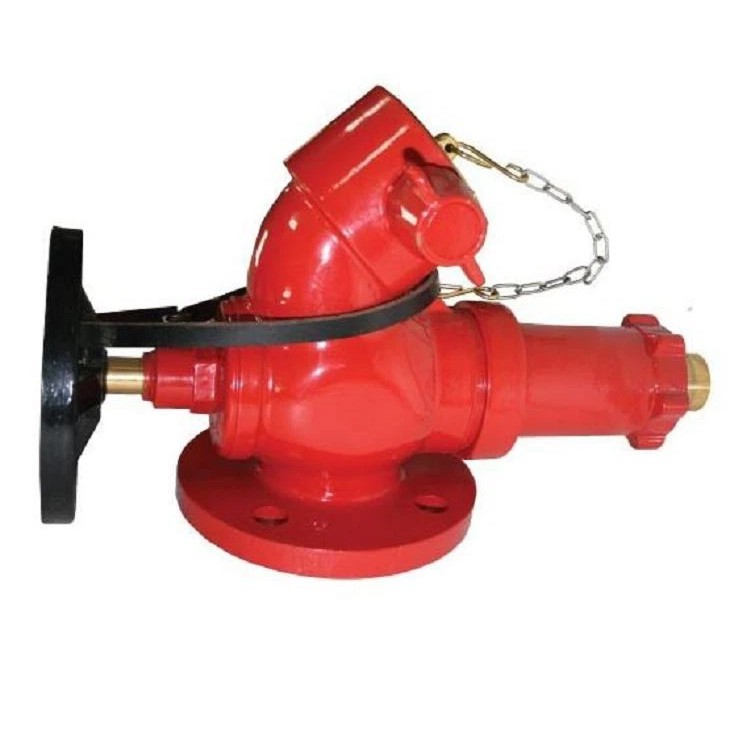
Buildings vary drastically in height, pipe routing, and internal water pressure dynamics. You cannot use a generalized, one-size-fits-all approach for life safety. Selecting the correct configuration ensures both operational safety and architectural compatibility.
Standard valves suit lower building levels where static water pressure remains highly manageable. In these zones, the natural head pressure from pumps or gravity tanks does not exceed the safe operating limits for standard canvas hoses. However, high-rise applications demand Pressure Regulating Valves (PRV). Water column weight creates massive, compounding pressure on the lower floors of tall buildings. A PRV mechanically restricts the outlet pressure automatically. This vital function prevents catastrophic hose ruptures. It also protects firefighters from dangerous physical blowback during operation.
Design profiles must match your specific architectural constraints. Manufacturers offer oblique, right-angle, and straight-through designs. You select the profile based on pipework orientation and riser layout. Oblique designs often fit exceptionally well in compact, narrow spaces. Right-angle profiles work perfectly when main pipes run vertically and the hose outlet must face horizontally. You must also consider cabinet depth limitations. A valve extending too far prevents the cabinet door from closing properly, creating a code violation.
Installation scenarios further dictate your configuration choices. Flush mounting integrates smoothly into corridor walls, offering a clean aesthetic. Alternatively, "with cabinet" configurations provide physical protection against vandalism or accidental impacts in high-traffic industrial zones. You must ensure generous clearance requirements regardless of the mounting style. Firefighters need ample physical space to attach bulky hose couplings quickly. They also require unobstructed hand clearance to spin the handwheel rapidly under stressful conditions.
Feature | Standard Landing Valve | Pressure Regulating Valve (PRV) |
|---|---|---|
Application Zone | Low-rise structures or upper floors | High-rise structures, lower levels |
Pressure Control | Passes system pressure directly | Actively restricts outlet pressure |
Safety Benefit | Provides high flow for low-pressure zones | Prevents hose bursts and blowback |
Internal Mechanism | Simple rotating spindle and seat | Complex calibrated spring or piston system |
Material integrity dictates operational survival. Fire protection systems sit idle for decades but must function flawlessly in an instant. You must evaluate construction materials rigorously to avoid catastrophic failures. Manufacturers typically use gunmetal (bronze), brass, or cast iron. Gunmetal serves as the unquestioned gold standard in the suppression industry. It actively prevents galvanic corrosion when connected to dissimilar metals. Gunmetal also resists seizing over long periods of inactivity. Brass may dezincify over time, invisibly weakening the internal crystalline structure. Cast iron risks severe internal rust if protective coatings scratch or fail.
Technical specifications require intense scrutiny during the engineering phase. Inlet variations include flanged and screwed connections. Flanged connections generally offer superior mechanical stability for high-vibration, high-pressure systems. Working pressure ratings vary significantly based on building demands. Standard systems might require 15 bar ratings. High-pressure environments often necessitate robust 20 bar ratings. You must verify precise test pressure thresholds to ensure safety margins. Standardized outlet connections guarantee critical interoperability. For instance, utilizing a BS 336 instantaneous female coupling ensures absolute compatibility across many international jurisdictions. If your valve does not match local fire brigade equipment, responders simply cannot connect their hoses.
Do not compromise on certification and testing proof. You must demand transparent documentation of third-party approvals. Reputable testing laboratories like LPCB, BSI Kitemark, and UL/FM provide rigorous independent validation. These certification marks confirm the unit survived extreme hydrostatic and mechanical stress testing. Avoid uncertified budget alternatives entirely. They frequently use inferior recycled alloys and lack proper dimensional tolerances. A mechanical failure during an active fire event carries consequences far beyond initial equipment savings.
Best Practice: Always request Material Test Reports (MTRs) alongside standard compliance certificates to verify exact alloy compositions before acceptance.
Common Mistake: Choosing an outlet thread type based on general plumbing standards rather than consulting specific local fire department coupling requirements.
Even premium, highly certified equipment fails if installed incorrectly. Installers frequently overtighten screwed inlet connections. This excessive mechanical stress causes invisible micro-fractures in the valve body. Another major installation risk involves construction debris. Contractors often fail to flush the riser pipework thoroughly before final installation. Construction debris, welding slag, or loose stones wash directly into the system. This hardened debris permanently scores and damages the sensitive rubber valve seat upon the very first use.
Inadequate cabinet spacing plagues many modern installations. Architects often minimize cabinet sizes to save wall space. If a firefighter cannot swing a standard heavy-duty spanner around the coupling, the installation fails its primary operational purpose.
Rigorous maintenance determines long-term reliability. Facility teams must follow standardized maintenance procedures strictly. We categorize these essential tasks into three primary phases to ensure total system readiness.
Visual Inspections: Technicians must regularly check for weeping or active leaking from the main body and connections. They verify handwheel mobility to ensure it spins freely without internal grinding. Inspectors also confirm the blanking cap remains secure, chained, and completely undamaged.
Flowing & Pressure Testing: You should conduct dynamic flow tests annually. This vital procedure verifies PRV settings remain accurate under active flow conditions. It also effectively clears internal sediment naturally accumulated in the lower sections of the riser.
Consumables Replacement: Rubber seat washers and internal gland packing degrade naturally over time due to ozone and pressure exposure. Facility managers must schedule routine preventative replacements for these items. Waiting for a visible leak to appear means the internal seal has already failed completely.
Procuring the right equipment demands a structured, evidence-based vetting process. You rely heavily on the technical competence and data transparency of your chosen manufacturer. Focus your evaluation on strict engineering support and proven quality control workflows.
Vendor vetting criteria should prioritize comprehensive quality control documentation. Do they provide verifiable, batch-specific pressure test certificates for every unit shipped? Relying on a single, outdated generic type-approval document proves insufficient for modern compliance. High-rise buildings require exceptionally precise hydraulic balancing. Can the vendor supply specific PRV factory calibrations tailored accurately to your exact hydrostatic engineering data? A generic PRV setting often fails to protect lower-floor zones adequately or starves upper floors of necessary flow.
You must also evaluate lead times and spare part availability. Standardized replacement parts like handwheels, heavy-duty blanking caps, and precision rubber washers must remain accessible for years after the initial installation.
Your next steps require precise engineering calculations before contacting suppliers. Define the exact pipe sizing for your primary risers. Calculate the required pressure drops per floor accurately based on building height. Once you gather these critical parameters, request detailed Technical Data Sheets (TDS) from your shortlisted manufacturers. Cross-reference their published flow curves directly against your building's specific hydraulic demands. This methodical, data-driven approach eliminates guesswork and ensures total system compatibility.
Selecting the correct water delivery components represents a critical safety milestone for any commercial or residential structure. These specialized devices function as ultimate life-safety choke points during a crisis. If they fail to deliver controlled, pressurized water, the entire fire suppression strategy collapses instantly.
Prioritize materials proven to survive decades of stagnation, particularly certified gunmetal alloys. For high-rise applications, mandate the integration of accurate pressure regulation to protect both emergency responders and physical equipment. Recognize that proper installation marks only the beginning of the journey. Rigorous adherence to visual inspections and dynamic testing protocols guarantees long-term performance. By treating these valves as essential, precision-engineered assets, you safeguard the structural integrity of your facility and the lives within it.
A: A street hydrant sits outdoors, connecting to municipal water mains to provide high-volume supply directly to fire trucks. A landing unit installs internally on building floors, connecting to the structure's vertical riser system. It allows responders to attach hoses directly on the specific floor experiencing an emergency without running long lines up multiple stairwells.
A: Most international fire codes require a PRV when the static or dynamic pressure at the floor outlet exceeds safe manual handling limits, typically around 7 to 8 bar. This dangerous excess pressure occurs naturally on the lower floors of tall buildings due to the massive weight of the water column in the vertical riser.
A: Industry standards generally mandate monthly visual inspections to check for leaks, physical damage, and handwheel mobility. Full dynamic flow and pressure tests must occur annually. These annual tests ensure internal pathways remain clear of debris and confirm pressure regulating mechanisms operate precisely within their calibrated safety ranges.
A: Gunmetal, a specific bronze alloy containing copper, tin, and zinc, offers superior resistance to galvanic corrosion and dezincification. Standard brass degrades much faster when exposed to stagnant water over many years. Gunmetal ensures the internal threads and moving parts will not seize, guaranteeing immediate operation during a rare emergency event.
Mantern Industrial Co., Ltd. is engaged in international business since 2012. Our aim is to provide good products with competitive price for our clients.
