

Views: 0 Author: Site Editor Publish Time: 2026-09-13 Origin: Site

You set a pot of water on the stove to boil. You step away to answer a quick email. Suddenly, an hour vanishes. The water has boiled dry, and the metal pan is dangerously scorching. As valve engineers, we see this scenario constantly. Unattended cooking remains a leading culprit behind devastating kitchen fires and lethal fuel leaks. Fortunately, automating your kitchen’s security does not require a complex, expensive smart-home overhaul.
Enter the mechanical shut-off device. It is a straightforward yet highly effective mechanism designed to physically cut off your fuel supply after a pre-determined time. These devices are undeniable lifesavers. However, choosing the correct duration range is crucial for maintaining a seamless culinary experience. A mismatch between your hardware and your daily habits leads to frustrating interruptions. This comprehensive guide breaks down how to evaluate your routine and select the exact timer specifications for your home.
From an engineering standpoint, this device is an uncompromising gatekeeper. It sits directly between your home's main fuel supply line and the stove burners. When you are ready to cook, you simply twist the dial to your desired duration. As the internal high-tension torsion spring slowly ticks down, it maintains an open pathway. The moment the dial hits zero? An internal ball valve snaps shut. The flow is completely severed. If you happen to be in another room or fall asleep, the stove safely extinguishes itself.
In an era obsessed with digital connectivity, this purely mechanical design offers a distinct advantage. These precision gear trains operate completely independent of your electrical grid. If a severe storm knocks out your power, or a smart-sensor battery dies, a mechanical fail-safe continues to function flawlessly. It is the ultimate backup for human forgetfulness.
Furthermore, recent industry analyses highlight a fascinating shift in residential safety trends. While smart-home technology dominates many appliance sectors, safety experts and utility engineers note a massive resurgence in demand for analog fail-safes in the kitchen. The consensus is clear: digital solutions are vulnerable to Wi-Fi drops, software glitches, and grid failures. A physical, mechanical shut-off provides an uncompromising layer of security that software simply cannot match. Industry reports also emphasize that selecting the wrong timer range leads to "user fatigue." If a safety device is cumbersome, homeowners will eventually bypass it entirely.
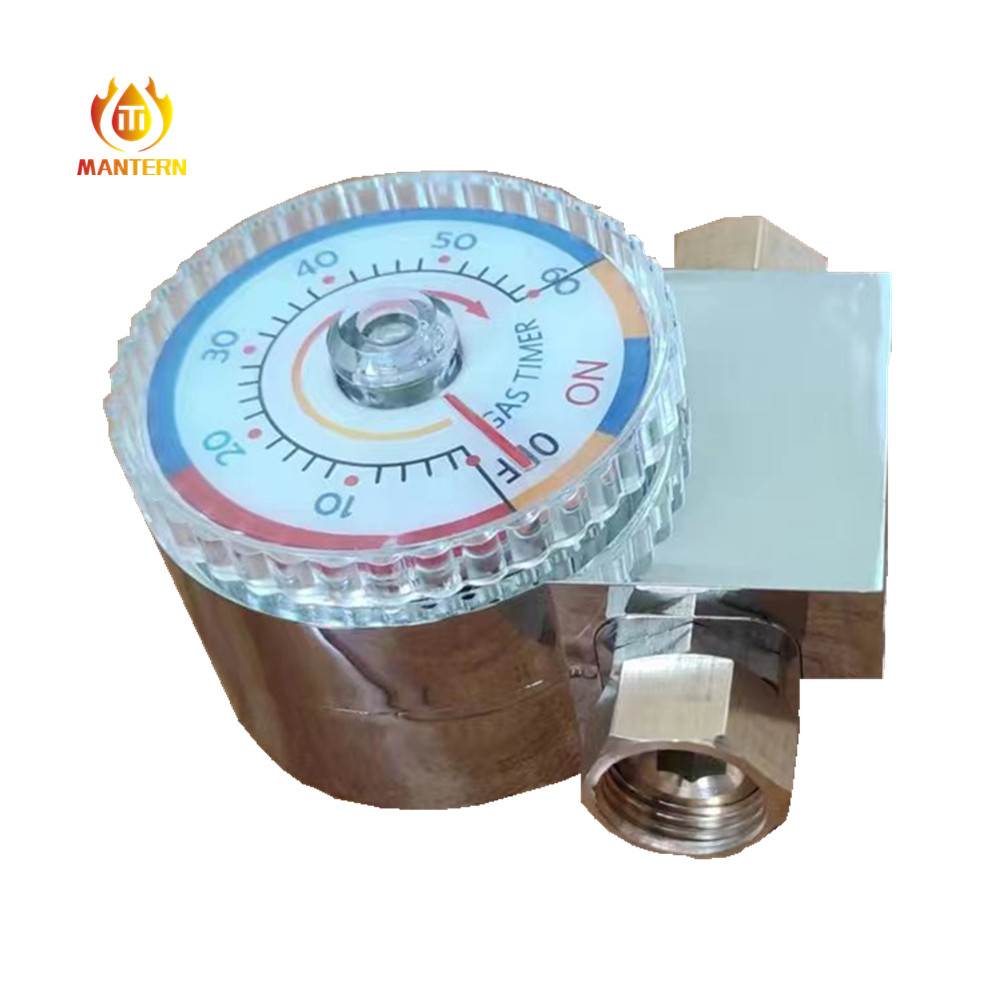
Setting a timer that is excessively long defeats its primary purpose. Imagine you are frying an egg, but you twist a 120-minute dial to its maximum. If you walk away, a grease fire has ample time to ignite and spread long before the valve closes. Conversely, setting a timer that is too short causes maddening interruptions. It forces you to constantly relight the burners mid-recipe. The correct range builds a subconscious habit. It ensures you utilize the safeguard every single time you ignite a burner, without ever feeling inconvenienced.
When you analyze a standard weeknight dinner, the active time spent over an open flame is surprisingly brief. Watching a rolling boil for penne pasta takes about 10 to 15 minutes. Pan-searing chicken breasts or steaming broccoli rarely exceeds the 20-minute mark. Because of these rapid culinary bursts, the 1-60 minute gas timer is widely considered the optimal engineering standard. It comfortably covers over 90% of daily household cooking tasks.
Beyond simple convenience, a 60-minute limit offers unparalleled granular precision. The physical real estate on the circular dial is dedicated to a shorter time frame. Consequently, the visual spacing between each minute increment is wider and significantly easier to read. If a delicate recipe requires exactly 12 minutes of simmering, aligning a 60-minute dial to that specific hash mark is highly accurate. This exactness prevents minor overcooking, which easily ruins delicate dishes like soft-boiled eggs or reduction sauces.
In contrast to the quick-prep lifestyle, some households embrace slow, low-heat extraction. Gourmet home chefs often prepare large batches of rich bone broths, heavy winter stews, and slow-braised briskets. They leave heavy-bottomed pots on the stove for hours.
In these specific scenarios, a 60-minute limit becomes a frustrating hindrance. Forcing a cook to return to the kitchen every hour just to wind the dial interrupts the passive cooking process. A 120-minute timer accommodates these marathon tasks beautifully. However, buyers must acknowledge the inherent trade-off. To fit two hours onto a standard-sized dial, the minute increments are tightly compressed. Setting a precise 7-minute timer on a 120-minute scale is visually challenging. It is distinctly less ideal for quick morning breakfasts.
Timer Specification | Dial Precision | Ideal Cooking Scenarios | Target User Profile |
|---|---|---|---|
1-60 Minutes | High (Wide visual spacing) | Boiling, pan-frying, quick steaming | Daily cooks, busy parents, elderly users |
1-120 Minutes | Moderate (Compressed increments) | Braising, bone broths, slow stews | Weekend chefs, slow-cooking enthusiasts |
Selecting the appropriate hardware requires a thoughtful assessment of your daily habits. By categorizing standard kitchen behaviors, you can pinpoint the exact specifications required to keep your home secure.
For university students, young professionals, and parents juggling chaotic schedules, kitchen time is fiercely optimized for speed. Meals usually consist of quick stir-fries or reheating leftovers. For this demographic, the 60-minute limit is the undisputed champion. It offers the perfect blend of a quick setting and immediate shut-off protection.
Conversely, if your weekends are defined by the aroma of a slow-reducing tomato sauce, you need equipment that supports your passion. The 120-minute dial allows you to tend to the garden or read a book. If you become entirely distracted, the massive pot of soup won't eventually boil dry.
Cognitive decline, or simply the overwhelming distractions of a multi-generational household, makes unattended stovetops a terrifying prospect. When prioritizing household gas safety for aging parents living independently, simplicity is paramount. A 60-minute dial is universally recommended here. The printed numbers are larger. Moreover, the physical act of twisting the dial requires noticeably less wrist torque than winding a heavy-duty 120-minute spring, empowering them to cook safely.
Once you determine the correct duration range, evaluating the physical construction is the next critical step. Utility lines operate under specific pressures and carry highly volatile fuels. Therefore, your chosen device must meet stringent engineering standards.
The winding process occurs in a harsh environment. It is constantly subjected to high ambient heat, aerosolized grease, and boiling moisture. Industry-standard devices must utilize premium materials. Look for a mechanical kitchen timer valve machined from heavy-duty aluminum alloy or high-grade brass. These materials offer legendary resistance to corrosion, especially against the harsh mercaptan additives found in municipal supplies.
Additionally, the unit must integrate seamlessly into your existing wall plumbing. Most residential utility lines utilize standard threading. You will typically see 1/2-inch NPT (National Pipe Thread) in North America or BSP (British Standard Pipe) internationally. Visually verify the pipe diameter behind your stove. A premium unit features deeply cut, precision-machined threads to ensure a completely airtight, leak-proof seal once wrapped with Teflon tape.
Successfully installing the hardware is a massive step toward a fortified home. However, it is not a "set it and forget it" solution. Like any moving mechanical part integrated into a critical utility line, it demands periodic verification. You must ensure the gears function exactly as intended.
Establishing a basic maintenance routine guarantees decades of reliability. Homeowners should conduct a functional stress test of their kitchen gas timer at least once every three months.
First, perform the audio test. Grasp the dial and firmly twist it to the 10-minute mark without igniting the burners. Listen closely to the casing. You should detect a consistent, rhythmic ticking sound. If the ticking stutters or stops prematurely, the internal gear train may be jammed by accumulated airborne grease.
Next, execute the shut-off test. Ignite a single burner and set the dial for exactly two minutes. Observe the blue flame as the dial approaches zero. The flame should extinguish immediately with a definitive click. There should be absolutely no flickering low flame. A lingering flame indicates the internal ball valve is failing to seat properly.
Finally, conduct a leak test every six months. Mix a simple solution of water and liquid dish soap. Apply this generously to the threaded pipe connections. If you observe tiny bubbles actively forming, you have a micro-leak. Shut off the main utility line immediately and contact a licensed professional.
Selecting the right timer range yields massive improvements in daily kitchen safety and culinary convenience. While 120-minute dials have their rightful place for slow-cooking enthusiasts, the 60-minute dial remains the undisputed champion for routine meal preparation. By automating your stove's shut-off process, you eliminate the anxiety of unattended cooking. You protect your property from the devastating consequences of simple human forgetfulness.
Do not wait for a near-miss to upgrade your kitchen. Evaluate your culinary habits, verify your pipe thread sizes, and invest in a premium cooking gas shut off valve. For reliable, precision-engineered mechanical valves that meet strict industry standards, explore the professional product lineups at Mantern to find the perfect fit for your household's safety needs.
While many of these devices are engineered with standard threads for straightforward DIY installation, dealing with combustible utility lines carries severe risks. It is always highly recommended to have a certified, licensed plumber perform the installation. A professional ensures the correct application of rated sealants, verifies directional flow, and performs calibrated pressure tests to guarantee there are no dangerous micro-leaks.
No, and this independence is arguably its greatest engineering advantage. These units utilize a heavy-duty, spring-loaded mechanical wind-up system. Twisting the dial stores the kinetic energy necessary to operate the gears and slam the internal valve shut. This analog design means the device continues to protect your property even during severe grid failures.
Yes, you maintain absolute control over the mechanism at all times. If your pasta finishes boiling early, you simply grasp the knob and manually rotate it backward to the zero position. This deliberate action instantly triggers the internal mechanism, shutting off the flow and saving fuel.
High-quality, industry-certified units are specifically engineered to maintain standard residential flow rates without bottlenecking the supply. Because they utilize a full-port ball valve design internally, the pathway remains completely unobstructed. As long as you purchase a unit matching the correct pipe diameter (usually 1/2-inch), your burners' maximum BTU output remains unaffected.
Premium mechanical timer valves are typically designed to handle both Natural Gas (NG) and Liquid Propane (LPG). The internal brass or aluminum alloy components and high-grade seals are engineered to withstand the specific pressures and chemical properties of both fuel types. Always verify the manufacturer's specifications on the product label prior to installation.
If the gear train jams due to heavy grease buildup or physical damage, the timer will stop ticking, and the valve will remain in the open position. This is exactly why routine audio and shut-off tests are critical. If you ever notice the dial freezing or failing to tick down smoothly, the unit must be replaced immediately to restore your fail-safe protection.
Mantern Industrial Co., Ltd. is engaged in international business since 2012. Our aim is to provide good products with competitive price for our clients.
