

Views: 0 Author: Site Editor Publish Time: 2026-11-18 Origin: Site

Is your gas system truly secure? Whether you are calibrating an intricate industrial main line, outfitting a commercial kitchen, or simply troubleshooting a residential propane setup, mastering the precise settings of your control devices is non-negotiable. Unchecked pressure often leads to catastrophic accidents, equipment failure, and persistent leaks.
This is where a high-performance Gas Regulator proves its value. Acting as the core of your fuel delivery network, this device must take a highly volatile, high-pressure source and reduce it to a safe, steady flow for your machinery. But what pressure should it hold? There is no universal number. The correct calibration depends entirely on your specific appliance requirements, the raw supply force, and environmental conditions. This guide will help you determine your proper settings, outline critical safety protocols, and ensure your network operates at peak efficiency.
Precision Matching: Your output must align strictly with the manufacturer requirements for the connected equipment. Standard residential propane systems often require exactly 11 inches of water column.
Safety Priority: A functioning control device prevents dangerous over-pressurization, protecting sensitive internal valves from rupture.
Internal Integrity: Proper lock-up performance serves as a mandatory safety test to ensure your valve seats remain airtight when demand is zero.
Capacity Planning: Always verify that your supply force matches the engineered capacity of the control device to prevent mechanical failure.
Routine Inspection: Periodic empirical checks prevent gas drift, ensuring that delivery remains consistent over the lifespan of the equipment.
To configure your system effectively, you must first understand how pressure reduction works. A pressure control valve acts as a mechanical intermediary, automatically throttling fuel flow when it reaches a set threshold. While high-pressure storage is necessary for transporting gas in municipal mains or cylinders, end-use appliances cannot safely handle those extreme levels.
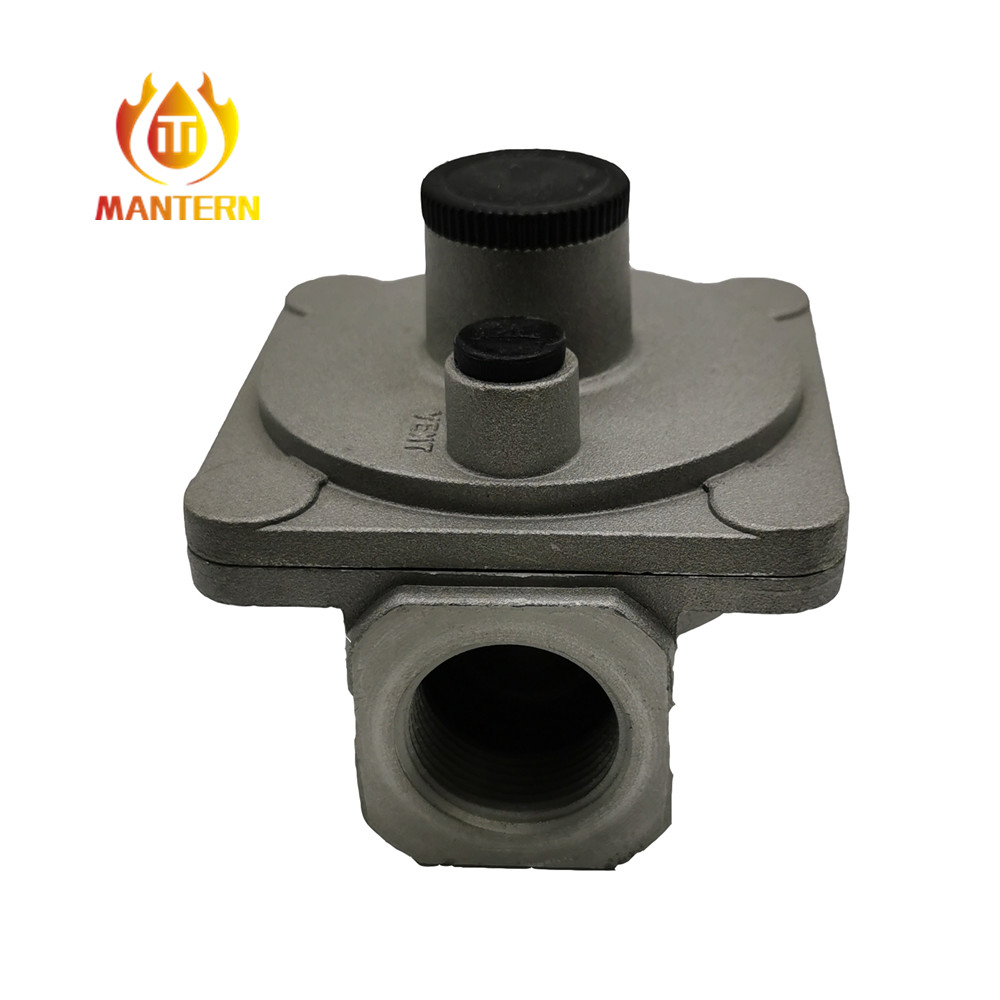
The system relies on a delicate balance of calibrated springs, a flexible diaphragm, and valve seats. When you open a fuel line, gas enters the unit and exerts force against the diaphragm. A heavy spring counterbalances this force. As downstream demand rises, the pressure under the diaphragm drops, allowing the spring to push the valve open for more fuel. Conversely, when demand ceases, the building pressure forces the diaphragm back against the spring to restrict flow. This dynamic equilibrium ensures your burner receives a consistent feed despite supply fluctuations.
A common mistake in pneumatic installation is confusing input and output parameters. These metrics define different physical states and require distinct engineering considerations.
Specifically, the Inlet Range dictates the maximum and minimum pressure the device can safely tolerate from the source. This capacity is heavily influenced by storage methods and ambient climate. A propane tank exposed to direct summer heat will generate significantly higher internal pressure than one sitting in frozen conditions. Your control device must be built to handle these extreme spikes without internal rupture.
In contrast, the Outlet Pressure is the final, reduced force delivered to your appliance. While raw input may surge, this output must remain rock-solid to ensure clean combustion.
Parameter | Definition | Typical Unit | Operational Role |
|---|---|---|---|
Inlet Range | Raw pressure from source to valve. | PSI or Bar | Defines structural integrity requirements. |
Outlet Pressure | Regulated delivery to end-use. | Inches of WC or low PSI | Ensures efficient, safe combustion. |
Selecting control hardware requires strict adherence to manufacturer specifications. The common myth that regulators are universal is a recipe for property damage. Each appliance is engineered to function within a narrow, non-negotiable band of pressure and volume.
Technicians should look for the Appliance Rating on the equipment data plate, which is usually riveted to the cabinet. This label specifies the required manifold pressure and energy consumption in BTU per hour. Your control device must handle both the specific pressure and the necessary volume simultaneously.
Mismatched equipment leads to severe operational risks. Excess pressure forces fuel through the orifices too quickly, resulting in loud, erratic flames and potential valve failure. Under-pressuring, meanwhile, starves the burner and leads to incomplete combustion, producing lazy yellow flames and dangerous carbon monoxide levels.
In fluid dynamics, Lock Up is a critical safety parameter. This refers to the pressure state reached when downstream demand drops to zero. When you turn off a furnace or stove, the internal valve must shut off completely to prevent further fuel flow.
A high-quality device closes tightly and maintains that seal indefinitely. If the internal seat degrades due to age, debris, or chemical wear, the valve may fail to seal. This leads to a dangerous condition where high-pressure gas creeps into low-pressure lines. Regular testing is the only way to ensure your system remains hermetically sealed during idle periods.
Even with a perfectly installed device, external factors can degrade stability. You must account for these to design a robust network.
Flow demand is a primary driver of instability. When multiple appliances ignite at once, the sudden draw can cause a momentary dip, or "droop," in delivered pressure. A properly sized high-capacity unit recovers instantly, while an undersized unit will leave the system starving. Furthermore, temperature plays a massive role in liquefied gas systems. During a cold snap, vaporization rates drop, causing tank pressure to plummet. If your input drops too close to the output requirement, the regulator will struggle to maintain equilibrium.
Finally, consider your plumbing geometry. Fuel experiences friction as it travels, leading to energy loss. If your pipe diameter is too small for the length of the run, you will experience a pressure drop that no amount of valve adjustment can fix.
The industry is currently shifting away from purely mechanical oversight toward intelligent, data-driven management. Modern installations are increasingly incorporating Internet of Things integrated sensors that move beyond simple reduction. These systems now track flow rates and temperature impacts in real-time, sending alerts to facility managers if deviations occur.
This trend is driven by global demands for higher emission standards and proactive safety. Rather than waiting for a manual test to reveal a failure, facility operators are using algorithmic analysis to detect micro-fluctuations and signs of gas creep long before they become hazards. This digital oversight is becoming a standard layer of protection in modern commercial and industrial gas architecture.
Identifying anomalies early prevents costly repairs. Troubleshooting requires a methodical visual and empirical approach using a digital manometer.
The burner flame is your best diagnostic tool. A healthy flame is sharp, stable, and blue. Low pressure often results in yellow, lazy flames and soot accumulation. Excessive pressure, however, creates loud, unstable flames that may lift off the burner ports. If you hear pulsing, the regulator may be hunting for stability due to internal freezing or mechanical binding.
When you encounter these symptoms, replace the unit rather than attempting a field repair. Most modern commercial and residential regulators are factory-sealed to maintain strict safety tolerances. Attempting to open these units introduces unnecessary liability and risks compromising the internal calibration beyond recovery.
Even the most advanced hardware will fail if installed incorrectly. Orientation is the most critical factor. Most manufacturers require the spring case vent to point downward on outdoor installations. This prevents ice, debris, and water from entering the housing.
If the vent becomes blocked, the internal diaphragm cannot move, which effectively locks the mechanism. For indoor installations, safety codes mandate a vent-limiting device or dedicated vent piping routed to the exterior. In the event of a diaphragm rupture, these features prevent raw fuel from filling an occupied space. Always test for leaks using a certified non-corrosive solution; never use an open flame.
Setting the correct pressure is a fundamental safety necessity rather than a technical suggestion. By verifying equipment requirements, understanding the difference between input and output capacity, and monitoring for lock-up integrity, you ensure the longevity of your infrastructure. Whether managing natural gas or propane, your regulator is the primary defense against pressure-related hazards. When in doubt, consult the manufacturer data plate or a qualified professional to confirm your network is within safe operational limits.
Consult the data plate or user manual for your specific appliance. These documents specify the manifold pressure, usually measured in inches of water column. Natural gas appliances typically require 3.5 to 7 inches, while propane units often require 10.5 to 11 inches.
Excessive pressure is dangerous because it can rupture internal gas valves and cause incomplete combustion. This results in dangerous carbon monoxide buildup and can lead to fire hazards if flames roll out of the burner box due to high fuel volume.
No. Most fixed-pressure regulators are factory-set and should not be adjusted. If the pressure has drifted, it usually indicates that the internal diaphragm or spring has fatigued. In these cases, the unit must be replaced.
You must choose hardware based on the total BTU demand of your equipment, not just the tank size. A low-flow regulator designed for small appliances will freeze up and fail if tasked with supporting a large heating system.
A vent limiter is a safety feature for indoor installations. It allows the diaphragm to breathe during normal operation but severely restricts gas release into the room if the diaphragm ruptures, helping prevent explosive gas accumulation.
Mantern Industrial Co., Ltd. is engaged in international business since 2012. Our aim is to provide good products with competitive price for our clients.
