

Views: 0 Author: Site Editor Publish Time: 2026-11-25 Origin: Site

A fire protection system is only as reliable as the water pressure driving its supply. In emergency firefighting situations, every second and every drop of water matters. Picture a fire crew arriving at a fully involved commercial structure. If the underground hydraulics fail to deliver, their response halts immediately. Lives and property are instantly compromised.
Civilians walk past these robust red, yellow, or green fixtures on sidewalks daily. Very few grasp the complex fluid dynamics, strict municipal regulations, and rigorous field testing required to keep them operational. It is easy to assume that opening a valve guarantees a massive, powerful stream of water. The reality of municipal plumbing proves far more intricate.
This brings us to a critical engineering and safety question. What pressure should a system actually deliver? The answer is never a single, universal number. Rather, it is a carefully calculated combination of static energy, remaining system force, and volumetric output.
This comprehensive guide breaks down the exact pressure requirements for municipal and private networks. We will explore industry standards established by authoritative bodies. Furthermore, we will detail how different equipment models handle extreme climates and explain how engineers conduct essential infrastructural evaluations.
The 20 PSI Rule: The absolute minimum remaining pressure a system must maintain while actively flowing is 20 psi. This baseline is critical to prevent underground pipe collapse and stop hazardous groundwater contamination.
Pressure vs. Flow: High static pressure does not automatically equate to high volume. A functional system must maintain adequate force while simultaneously delivering a sufficient volume of water, measured in Gallons Per Minute, to extinguish flames effectively.
Testing is Mandatory: Regular field evaluations, including specialized indoor assessments, are legally required. They ensure aging infrastructure continues to meet strict national fire safety codes.
Design Matters: Different geographical environments dictate highly specific equipment designs. Variations in barrel types and internal valve placements interact with municipal water supplies in unique ways based on regional freezing risks.
To accurately determine what a system can deliver, engineers recognize that water pressure is not a singular metric. We break this physical force down into three distinct, measurable categories. Each plays a highly specific role in evaluating the true health and capability of a water distribution network.
Static pressure refers to the potential energy trapped within the water distribution system when no water is actively flowing. Measured in psi or bar, this metric is heavily influenced by the elevation of the municipal water tower relative to the street level. It also relies on the baseline force provided by utility booster pumps. Civil engineers measure this first, as it serves as a baseline indicator of the local water supply's general capacity. However, high static pressure alone can deceive you. It suggests a strong supply but does not guarantee adequate performance during an active emergency draft.
Once a valve opens and water surges through the hoses, the fluid dynamics change entirely. For field engineers and emergency responders, Residual Pressure remains the most critical metric. It represents the force left in the underground supply system while water actively discharges. When a heavy-duty pumper truck draws water from the street, it creates a massive draft. This aggressively lowers the pressure in the surrounding underground mains. The network must retain enough residual force to push water into the pump without causing a dangerous vacuum effect.
Flow pressure, frequently referred to as Pitot pressure, is the forward velocity of the water as it aggressively exits the open orifice. Unlike the previous two metrics, we do not use this measurement to determine the stress inside the underground pipes. Instead, field inspectors insert a handheld Pitot gauge directly into the water stream to calculate the actual volumetric output. By measuring the velocity of the water exiting a specific nozzle size, engineers mathematically determine exactly how many gallons per minute the system can deliver to a chaotic fire scene.
Fire safety organizations do not rely on guesswork. They establish rigorous, empirical standards to ensure public safety and infrastructural integrity. These mandates dictate the minimum performance requirements for any municipal or private water network.
According to strict guidelines set by the National Fire Protection Association and the American Water Works Association, 20 psi is the golden rule. When a fire engine heavily drafts water during a multi-alarm fire, the pressure in the municipal water main must never drop below this critical threshold.
The reasoning behind this uncompromising standard is rooted deeply in fluid mechanics and public health. Dropping below 20 psi creates a dangerous vacuum effect within the municipal mains. This negative pressure triggers back-siphonage. It rapidly draws contaminated groundwater, soil toxins, and non-potable liquids directly into the clean public drinking water supply. Specifically, older cast-iron pipes can physically collapse inward under vacuum conditions. This instantly severs the water supply to the fireground and causes catastrophic delays.
While 20 psi is the absolute minimum acceptable limit during heavy operation, standard day-to-day static pressures run much higher. A healthy municipal water system typically maintains a baseline between 40 psi and 80 psi. In certain high-elevation or heavily pumped industrial zones, this baseline can easily exceed 100 psi.
It is crucial to understand that firefighters rarely rely on raw street pressure to fight a blaze. Instead, they utilize sophisticated mechanical pumps on their apparatus. They intake the water at normal operating pressures and drastically boost it. This mechanical amplification pushes the water out of the nozzle at velocities exceeding 150 psi, allowing the stream to penetrate intense thermal columns and reach the seat of the fire.
From a modern engineering perspective, the industry is rapidly moving away from purely manual testing. We observe a massive shift toward integrating smart IoT sensors directly into municipal water networks. Forward-thinking water authorities deploy real-time monitoring devices on critical infrastructure nodes. These sensors track baseline pressures and instantly detect abnormal drops. Instead of waiting for an annual manual check, engineers use data-driven insights to predict infrastructure failures. This proactive approach allows teams to correct pressure anomalies long before they compromise a vital emergency response.
A widespread misconception among the general public is that high pressure alone is sufficient to extinguish a roaring fire. In reality, pressure merely dictates how far and how hard the water can be projected. It must be paired with adequate volume to actually absorb the thermal heat.
We deal with a strict inverse relationship between pressure and Flow Rate within a closed water distribution system. As the volume of water leaving the system increases, the remaining pressure in the underground pipes naturally decreases. Pushing more water into the fire hoses creates massive friction loss against the interior pipe walls. Every pipe diameter has a strict physical limit. The ultimate engineering challenge lies in designing a water main network large enough to deliver massive volume without allowing the system pressure to plummet into the danger zone.
To help arriving emergency responders instantly recognize the volumetric capacity of a specific water source, the National Fire Protection Association established a highly visible, standardized color-coding system. We paint the caps and bonnets of the fixtures based on their tested output capacity, ensuring they safely maintain the 20 psi residual threshold.
Hydrant Class | Bonnet/Cap Color | Flow Rate Capacity (GPM) | Typical Application |
|---|---|---|---|
Class AA | Light Blue | 1,500 GPM or greater | High-density commercial, heavy industrial zones |
Class A | Green | 1,000 to 1,499 GPM | Dense residential, light commercial areas |
Class B | Orange | 500 to 999 GPM | Standard suburban residential neighborhoods |
Class C | Red | Less than 500 GPM | Rural areas, dead-end water mains |
The physical engineering and external design of the equipment significantly affect how it manages municipal water pressure. Different climates and industrial environments dictate the deployment of highly specific models. As engineers, we look closely at material strength, working pressure ratings, and internal valve designs.
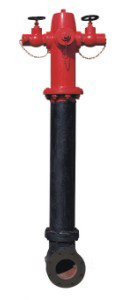
The Pillar Type configuration is an above-ground, vertically oriented fixture prominently utilized throughout Europe, Asia, and massive industrial complexes worldwide. Unlike flush-mounted systems hidden beneath street covers, the pillar design stands tall above the surface. This high visibility prevents vehicular accidents and allows for rapid, unobstructed hose connections during a chaotic crisis.
When selecting equipment for high-pressure industrial zones, material specifications are non-negotiable. For instance, a premium 3-Way Dry Barrel Pillar unit must utilize a high-strength Ductile Iron body. Standard industrial applications typically demand a working pressure rating of 1.6 MPa. To guarantee zero leakage under extreme municipal surges, the factory test pressure must reach at least 2.4 MPa. These rigorous manufacturing parameters ensure the internal valves do not fail when a pumper truck suddenly shuts down a line, causing a massive water hammer effect.
In regions with extreme weather fluctuations, the interaction between the equipment and system pressure is dictated by climate-specific designs.
Wet Barrel systems are utilized exclusively in warm, temperate climates where freezing is never a concern. In these systems, the municipal water pressure is maintained constantly throughout the entire above-ground structure, right up to the individual discharge valves. Water flows instantly the moment a valve is turned.
In contrast, Dry Barrel systems are legally mandated in regions that experience harsh, freezing winters. To prevent the above-ground housing from cracking under expanding ice, the pressurized water is held deep underground, safely below the regional frost line. The upper barrel remains completely dry and unpressurized. A firefighter uses a specialized wrench to manually open the lower main valve, allowing the pressurized water to finally surge upward.
Evaluating whether a system meets the required hydraulic standards requires precise, empirical testing. Municipal water authorities, fire protection engineers, and certified contractors meticulously conduct these essential evaluations.
A standard flow test exposes the true hydraulic capabilities of a water distribution network. To ensure accuracy, the process requires at least two fixtures located on the same water main.
First, an inspector attaches a highly calibrated pressure gauge to a closed test unit to record the initial static pressure. This gauge remains in place to monitor drops in the system. Next, located downstream, a flow unit is fully opened to violently discharge water into the street.
While the water is discharging, a technician inserts a hand-held Pitot gauge directly into the blast stream to measure the forward velocity. Simultaneously, the inspector at the test unit records the new, lower residual pressure reading. By applying the Pitot reading to standard hydraulic formulas, engineers verify exactly what volume the system can deliver without dropping below the critical 20 psi mark.
Hydraulic testing extends far beyond street-level municipal networks. High-rise buildings and sprawling commercial structures utilize internal vertical pipes, known as standpipes, to deliver water to upper floors. A Landing Valve Test is a specialized procedure used to evaluate these indoor networks. The landing valve itself is the designated connection point on a specific floor where firefighters attach their hoses.
Because water loses approximately 0.433 psi of pressure for every foot of vertical elevation it climbs, these internal systems require rigorous evaluation. Technicians open the valve to ensure the internal fire pumps can overcome gravity and deliver a minimum running pressure. Local building codes frequently mandate this running pressure to be between 65 psi and 100 psi. Additionally, this test verifies that Pressure-Reducing Valves are functioning correctly. If a reducer fails on a lower floor, the pressure spikes dangerously high, making the charged fire hose physically impossible for a firefighter to control safely.
When a system fails to deliver the minimum required pressure during a routine flow test, troubleshooting must begin immediately. Low pressure rarely stems from a mechanical flaw in the above-ground Fire Hydrant itself. It usually points to hidden infrastructure degradation.
The physical condition of aging municipal water mains plays a massive role in pressure delivery. Over decades, older iron and steel pipes suffer from tuberculation. This severe buildup of rust, minerals, and corrosion on the interior walls reduces the internal diameter of the pipe. It drastically increases friction loss, choking off the available pressure. In addition, geographical elevation changes heavily impact delivery. Units located at the top of steep hills inherently display lower static and residual pressures than those in valleys due to the sheer energy required to push heavy water upward against gravity.
Human error and maintenance oversights frequently cause artificial pressure drops. Municipal water networks contain thousands of underground isolation valves used to shut off water during localized pipe repairs. If a utility worker forgets to fully reopen a street valve after completing a repair, it creates a severe bottleneck. The system may show a perfectly normal static pressure. However, the moment water flows, the restriction causes the remaining pressure to plummet instantly. Sediment buildup, rocks, and debris trapped in the lower boot can also restrict flow, highlighting the urgent need for regular flushing.
While municipal authorities maintain street-level infrastructure, private property owners, facility managers, and industrial plant operators bear full legal responsibility for the fire protection equipment located on their private premises.
Compliance with fire safety codes is not optional. It is a strict legal mandate. Under the guidelines of NFPA 25, private systems must undergo comprehensive flow testing every three to five years. Furthermore, they require a documented visual inspection and a mechanical lubrication service annually. These routine inspections verify that caps are not seized, the main valve operates smoothly without hesitation, and the barrel drains properly to prevent catastrophic winter freeze-ups.
Failing to maintain the required pressure and flow standards carries severe, cascading commercial consequences. From a regulatory standpoint, non-compliance leads to failed fire marshal inspections and substantial municipal fines that can cripple a business. Financially, commercial property insurance providers routinely require proof of hydraulic testing. Failure to provide updated documentation results in voided insurance policies or exorbitant premium hikes. Most importantly, the ultimate cost of negligence is total system failure during an actual fire emergency, leading to devastating, preventable property loss.
A fire protection network must reliably deliver specific, calculated water pressure to save lives. The absolute minimum residual pressure is 20 psi. This critical threshold protects the underground mains from collapsing and prevents toxic groundwater contamination.
However, pressure alone is never enough. It must pair with an adequate volumetric output to effectively absorb the intense heat of a structural fire. Whether you manage a robust dry-barrel system on a freezing industrial site or conduct an indoor valve test on the 30th floor of a commercial high-rise, these metrics ensure operational readiness.
Regular testing and diligent maintenance remain non-negotiable pillars of public safety. Facility managers and property owners must proactively schedule routine flow tests and consult with certified fire protection engineers to guarantee full compliance with modern safety codes.
If your infrastructure requires robust, industry-compliant upgrades, explore the professional-grade solutions available at Mantern China. Select the exact equipment engineered to handle your specific pressure requirements and secure your property today.
Static pressure is the baseline force in the water pipes when no water is actively flowing. It represents the system's stored potential energy. Residual pressure is the force that remains in the underground system while the valve is open and water is heavily flowing. Residual pressure is the far more critical metric. It ensures the system does not collapse or draw in contaminated groundwater through a vacuum effect during an emergency draft.
Yes, absolutely. If the static or flow pressure exceeds 150 to 175 psi, it becomes highly dangerous. Extremely high pressure makes it physically exhausting and hazardous for firefighters to safely maneuver and handle the charged hoses. It can also cause severe, expensive damage to the municipal plumbing infrastructure. Engineers install pressure-reducing valves in these high-pressure zones to safely regulate the violent force.
It is an above-ground fixture that stands vertically, resembling a solid column or pillar. Because of its elevated, robust profile, it remains highly visible and incredibly easy to access during chaotic emergencies. Engineers commonly deploy this design in heavy industrial facilities, commercial complexes, and various international regions outside of North America.
You should perform an evaluation on a commercial building's internal standpipe system on an annual basis. This routine testing ensures the internal valves open smoothly, do not suffer from hidden leaks, and consistently deliver the correct pressure and volume required by strict local and national fire codes.
While pressure dictates how far and how forcefully the water sprays from the hose nozzle, the Flow Rate is the actual physical volume of water. Volume is what absorbs the thermal heat and ultimately extinguishes the flames. A system with extremely high pressure but a severely low flow rate simply will not provide enough water to be effective against a rapidly spreading structural fire.
You cannot magically increase the municipal street pressure at the fixture itself. If a flow test reveals inadequate pressure, engineers must address the underground infrastructure. This involves cleaning existing mains to remove tuberculation, replacing old pipes with larger diameter lines to reduce friction loss, or upgrading the municipal booster pumps at the main utility water station.
In most standard suburban residential neighborhoods, a healthy municipal water system maintains a normal static operating pressure between 40 psi and 80 psi. However, during an active fire emergency, when a pumper truck is actively drafting water, the residual pressure in those residential mains must never drop below the legally mandated 20 psi threshold.
Mantern Industrial Co., Ltd. is engaged in international business since 2012. Our aim is to provide good products with competitive price for our clients.
