

Views: 0 Author: Site Editor Publish Time: 2026-08-08 Origin: Site

While standard audible alarms alert occupants to immediate, life-threatening carbon monoxide (CO) emergencies, they fail to provide the contextual data required to assess early-stage or chronic leaks. Without a visual readout, property owners and facility managers cannot determine the severity of a CO event, track intermittent exposure, or differentiate between a minor appliance malfunction and a severe hazard. Selecting a Carbon Monoxide Detector with the right display features—such as real-time PPM (parts per million) tracking and peak level memory—transforms a basic warning device into a comprehensive diagnostic tool. You need verifiable numbers to make fast evacuation decisions. Relying solely on a siren leaves you guessing about the actual gas concentration in the room. This guide evaluates the specific display functionalities required for accurate CO monitoring, helping you read and interpret alarm levels effectively.
Standard vs. Low-Level Displays: Most standard digital CO alarms are programmed to display "0" for CO levels below 30 PPM to comply with UL 2034 standards, whereas specialized low-level monitors display readings all the way down to 5 PPM.
Peak Level Memory is Essential: A peak level button allows users to retrieve the highest recorded CO concentration, which is critical for diagnosing intermittent leaks that dissipate before an inspection.
The UL 2034 Peak Limitation: On standard detectors, even the peak level memory will hide historical readings if the highest spike was below 30 PPM.
Sensor Technology Dictates Accuracy: The reliability of any digital readout depends entirely on the underlying electrochemical CO detector technology and its calibration lifespan.
Compliance Trade-Offs: Buyers must weigh the need for granular, low-level data against strict adherence to standard residential compliance codes (like UL 2034 or NSPIRE).
A reliable detector must not only sound an alarm at dangerous thresholds but also provide verifiable data to first responders and HVAC technicians. When an audible siren activates, occupants evacuate immediately. Once emergency personnel or contractors arrive on site, they need exact atmospheric data to locate the source of the combustion gas. A basic audible unit offers no historical context. It stays silent until a specific threshold is met. A digital display bridges this gap. It offers quantifiable data that dictates the urgency of the response. You can confirm when the environment returns to a safe baseline level after ventilation. We rely on these visual readouts to determine if a building is safe to re-enter.
The accuracy of any digital display relies on the internal sensor mechanism. Modern devices utilize an electrochemical CO detector to measure gas concentrations. This technology operates through a direct chemical reaction. When carbon monoxide enters the sensor chamber, it interacts with a chemical electrolyte and a platinum catalyst. This interaction oxidizes the carbon monoxide into carbon dioxide. The process releases electrons.
The release of electrons generates a small electrical current. The strength of this micro-ampere current is directly proportional to the concentration of carbon monoxide in the surrounding air. The internal microprocessor measures this analog electrical signal. It runs the signal through a calibration algorithm and converts it into the digital PPM (parts per million) readout displayed on the screen. Because this process is highly sensitive, electrochemical sensors provide the most accurate readings available for residential and commercial safety applications.
Understanding the distinction between basic models and advanced digital units clarifies their respective roles in life safety.
Audible-only models provide binary alerts based on time-weighted averages. They remain completely silent until carbon monoxide concentrations reach a specific threshold for a sustained period. Users only know the environment is either safe or unsafe. They offer no diagnostic value for minor appliance malfunctions.
A digital CO alarm provides continuous or on-demand visual verification of exact atmospheric conditions. Users can monitor minor fluctuations in indoor air quality. You can track the effectiveness of ventilation and identify failing gas appliances long before the concentrations reach life-threatening levels.
Contractors use digital readouts to diagnose complex drafting issues in residential and commercial buildings. When a customer reports feeling unwell but the standard alarm hasn't sounded, a digital display provides the necessary clues.
Check the baseline reading upon entering the property to establish the current ambient gas level.
Activate combustion appliances like furnaces, water heaters, and gas ranges one by one.
Monitor the digital screen for real-time PPM spikes during the initial appliance startup phase.
Observe the readings while exhaust fans run to identify potential backdrafting scenarios.
Use the peak level memory to see what happened overnight when the heating system ran continuously.
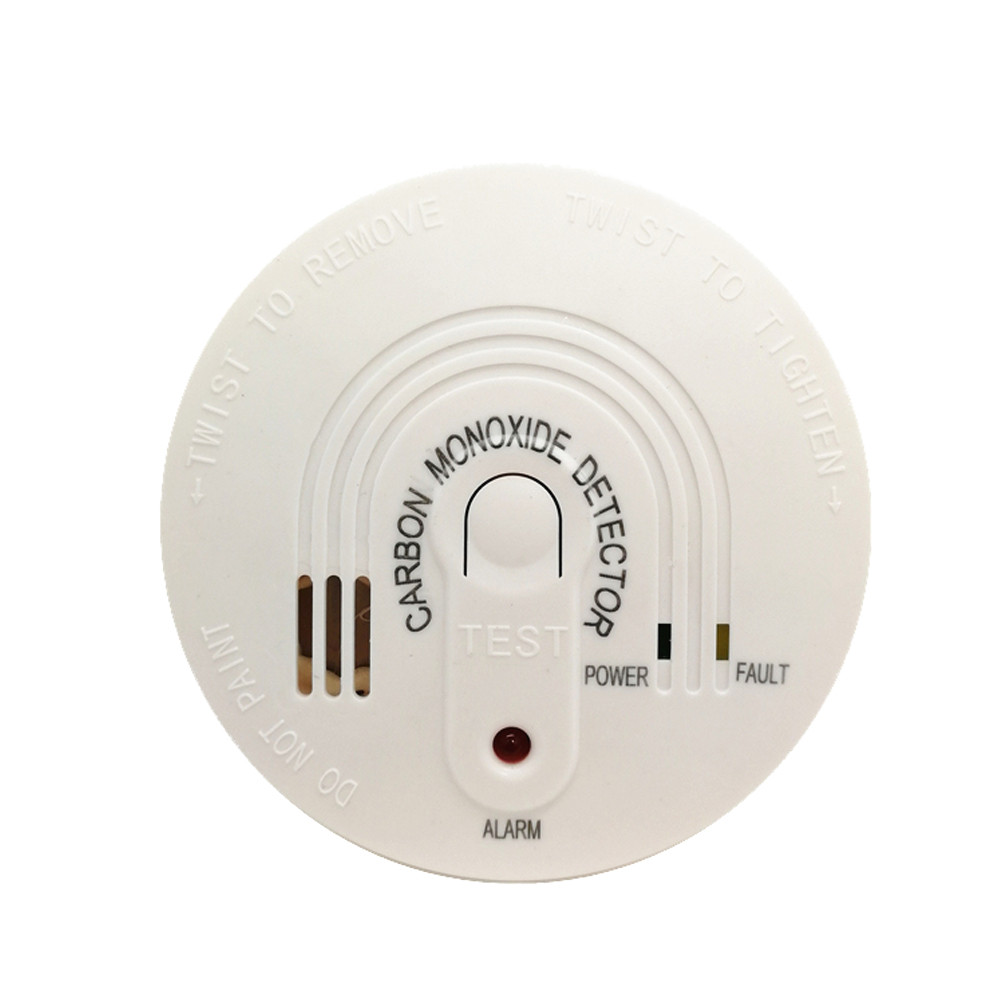
The primary interface for any digital detector is the LCD screen. Manufacturers design these screens with different operational parameters based on power consumption limits. Hardwired units often feature continuous monitoring displays. They provide an always-on readout of the current PPM. Battery-operated units typically utilize push-to-wake screens to conserve battery life. You must press a button to illuminate the display and view the current reading.
Visibility factors play a massive role during an emergency. High-contrast ratios, large numerical digits, and wide viewing angles ensure that occupants or first responders can read the display rapidly from a distance. A screen that requires a user to stand directly in front of it at eye level loses practical value during a chaotic evacuation. We look for displays that can be read from at least ten feet away in low-light conditions.
Installing a device with a high-quality screen is useless if you place it in a blind spot. We always recommend mounting digital units at eye level, typically five feet off the floor. This placement allows occupants to read the PPM levels without needing a step stool or flashlight. Avoid placing them near ceiling fans, open windows, or HVAC supply registers. The turbulent air from these sources can blow combustion gases away from the sensor, resulting in artificially low readings on the display. Furthermore, keep them out of direct sunlight. Prolonged UV exposure can degrade the LCD screen, making the numbers fade and become unreadable over time.
Real-time data often proves insufficient for diagnosing intermittent leaks. Consider a residential gas furnace with a hairline crack in its heat exchanger. During the initial startup phase, the furnace might emit a brief spike of 45 PPM of carbon monoxide into the living space. Once the furnace reaches optimal operating temperature and the chimney draft establishes, the leak stops. The ambient gas dissipates. Because standard alarms use time-weighted averaging, this brief 45 PPM spike will not trigger the audible siren.
The peak level memory function solves this diagnostic blind spot. By pressing the peak level button, users can retrieve the highest recorded PPM concentration stored in the device's memory since its last reset. This allows HVAC technicians to view historical spikes even after the area has been thoroughly ventilated. However, users must understand the UL 2034 limitation. On a standard digital device, if the highest historical spike remained below 30 PPM, pressing the peak level button will still display "0". The device actively suppresses these low-level historical readings to comply with standard residential codes.
Emergencies rarely happen under optimal lighting conditions. Carbon monoxide leaks frequently coincide with severe weather events, power outages, or nighttime hours when occupants are asleep. Automatic backlighting that activates the moment an alarm sounds is non-negotiable for a visual display to be effective. Without a backlight, the LCD screen becomes unreadable in the dark.
Beyond the digital text display, color-coded LED indicators provide immediate status updates that require no reading comprehension. Standard configurations utilize a green LED to indicate normal power operation. An amber or yellow LED signals a fault, error, or low battery. A flashing red LED visually reinforces an active alarm state. These supplementary lights help users instantly categorize the nature of the device's audible chirp.
Standard UL-listed devices are intentionally programmed to display "0" when ambient concentrations fall between 0 and 29 PPM. This design choice stems from a specific regulatory requirement aimed at preventing nuisance calls to emergency services. Minor, non-lethal sources of carbon monoxide—such as an idling vehicle in a nearby driveway, a recently extinguished candle, or brief downdrafts in a chimney—can temporarily raise indoor levels to 15 or 20 PPM.
This creates a user experience dilemma for manufacturers. They must balance user anxiety against the need for transparency regarding minor indoor air quality issues. Displaying 12 PPM might cause a homeowner to panic and call the fire department for a non-emergency. This drains municipal resources. Therefore, standard devices hide these readings. They ensure that users only react to actionable, dangerous levels of gas.
The 30 PPM mark represents the threshold where standard digital screens begin displaying active numbers. When the environment reaches 30 to 50 PPM, the screen will illuminate and show the exact concentration. However, the device will likely remain silent.
This introduces the concept of time-weighted response. Carbon monoxide poisoning is cumulative. The danger depends on both the concentration of the gas and the duration of exposure. A standard carbon monoxide alarm may display 40 PPM for up to 30 days without sounding the audible siren. The display serves as an early warning system. It prompts the user to open windows and investigate gas appliances before the situation escalates into an acute emergency.
As concentrations enter the 51 to 100 PPM range, the time-to-alarm decreases significantly. At 70 PPM, a standard UL 2034 detector is required to sound its audible alarm within 60 to 240 minutes. The digital display becomes a necessary warning tool during this window.
Healthy adults might not notice symptoms immediately at 70 PPM. Vulnerable individuals—such as infants, the elderly, or those with cardiovascular conditions—may begin experiencing mild headaches, fatigue, or shortness of breath. Seeing a reading of 75 PPM on the display allows occupants to correlate their physical symptoms with the environmental hazard and evacuate before the audible alarm officially triggers.
At levels exceeding 100 PPM, the situation transitions into a high-level emergency requiring rapid response. At 150 PPM, the audible alarm will trigger within 10 to 50 minutes. At 400 PPM, the alarm sounds in less than 15 minutes. At these concentrations, occupants will likely experience severe headaches, dizziness, nausea, and confusion.
During an active evacuation scenario at high PPM levels, the digital display serves primarily for first responder situational awareness. When firefighters enter the building wearing self-contained breathing apparatus, checking the peak level or current readout on the wall-mounted detector instantly informs them of the toxicity of the environment. It helps them estimate the potential source volume of the leak.
PPM Exposure Symptoms and Display Responses
PPM Range | Standard Display Action | Audible Alarm Timeframe | Typical Physical Symptoms |
|---|---|---|---|
0 - 29 PPM | Displays "0" | No Alarm | None for healthy adults |
30 - 50 PPM | Displays exact number | Up to 30 days | Mild fatigue in vulnerable groups |
51 - 100 PPM | Displays exact number | 60 to 240 minutes | Headaches, shortness of breath |
101 - 399 PPM | Displays exact number | 10 to 50 minutes | Dizziness, nausea, confusion |
400+ PPM | Displays exact number | 4 to 15 minutes | Loss of consciousness, fatal risk |
The market divides detection into two distinct categories based on how they handle low-level gas concentrations. Standard detectors carry a UL 2034 listing. These devices are designed strictly to prevent acute poisoning in healthy adults. They will not alarm, nor will they display, low levels of carbon monoxide. Their sole purpose is to prevent fatalities, not to monitor general indoor air quality.
Conversely, low-level monitors are specialized devices that operate outside the UL 2034 standard. They are often unlisted or carry different certifications. These monitors measure and display carbon monoxide concentrations all the way down to 5 PPM. They provide hyper-sensitive environmental data. They alert users to the slightest presence of combustion gases.
Carbon Monoxide Detection Comparison
Feature | Standard UL 2034 Detectors | Low-Level CO Monitors |
|---|---|---|
Minimum Display Reading | 30 PPM (Displays "0" below this) | 5 PPM |
Audible Alarm Trigger (Low Levels) | No alarm below 70 PPM (typically) | Visual/Audible alerts at 15-25 PPM |
Primary Target Audience | General residential compliance | Vulnerable populations, HVAC diagnostics |
Code Compliance | Meets standard building codes | May not meet local fire codes as a standalone unit |
Peak Level Memory | Only records spikes above 30 PPM | Records all spikes above 5 PPM |
Determining which category of device to install depends heavily on the occupants and the facility's specific needs. Facilities housing infants, the elderly, pregnant women, or individuals with respiratory and cardiovascular conditions require low-level displays. These vulnerable groups can suffer adverse health effects from prolonged exposure to levels as low as 15 PPM. This is a concentration completely ignored by standard UL 2034 devices.
Use cases for low-level monitors extend beyond health protection into preventative maintenance. Facility managers use these sensitive displays for the early detection of failing appliances. A water heater that begins emitting 12 PPM of carbon monoxide is exhibiting early signs of improper combustion or a failing flue. A low-level monitor catches this degradation weeks or months before it becomes a 100 PPM life-safety hazard.
Buyers face a conceptual trade-off between strict code compliance and hyper-sensitive environmental data. Local building codes and fire marshals typically require UL 2034 listed devices for legal occupancy. Installing only an unlisted low-level monitor might result in failed building inspections. The optimal solution often involves installing standard UL-listed detectors to satisfy legal requirements. You can supplement these with low-level monitors in specific areas like the mechanical room or primary bedroom for advanced diagnostic capabilities.
The physical LCD screen is no longer the only way to read alarm levels. The industry has seen a massive shift from localized screens to smartphone integrations. App-based dashboards replicate the physical display on a mobile device. They offer several distinct advantages. Users gain remote monitoring capabilities. You can check the levels of a vacation home or rental property from anywhere in the world. Apps also provide historical graphing. They map PPM levels over weeks or months to identify chronic, low-level exposure trends that a simple peak-level button cannot convey.
However, this connectivity introduces significant cons. App-based displays rely entirely on Wi-Fi or Bluetooth connections, local routers, and cloud servers. During a severe storm that knocks out power and internet, the app becomes useless. Furthermore, there is potential latency during an active emergency. A localized on-device screen provides immediate, zero-latency data directly at the source of the hazard. This remains superior for on-site evacuation decisions.
Connecting an alarm to centralized home automation systems allows for complex safety routines. If the detector registers 50 PPM, the automation system can automatically shut off the smart thermostat to disable the furnace. It can turn on exhaust fans and unlock smart doors for first responders.
A common point of failure in DIY smart home setups is confusing gas types. Users frequently purchase CO2 (Carbon Dioxide) air quality monitors to track ventilation. They mistakenly believe they are protected against CO (Carbon Monoxide). Carbon dioxide is a naturally occurring byproduct of human respiration. Carbon monoxide is a toxic byproduct of incomplete combustion. Smart home dashboards must explicitly pull data from a dedicated electrochemical sensor, not a generic air quality VOC or CO2 monitor.
For property managers overseeing subsidized or public housing, compliance with HUD's NSPIRE (National Standards for the Physical Inspection of Real Estate) is mandatory. NSPIRE strict guidelines dictate the placement and functionality of alarms. While digital displays are not strictly mandated by NSPIRE, they drastically aid in passing inspections. A functional digital display proves to inspectors that the device is receiving power. It shows the sensor is active and the current atmospheric safety is verifiable without needing to trigger a disruptive test sequence.
The most significant implementation risk involves the physical limitations of the sensor. Electrochemical sensors degrade over time as the internal chemical electrolyte dries out or becomes depleted. The typical lifespan of these sensors is 7 to 10 years, regardless of how often they alarm.
To mitigate this risk, buyers must choose displays that feature explicit "End of Life" error codes. Older or cheaper models might just emit a generic beep every 60 seconds when the sensor dies. This leaves the user guessing whether it is a low battery, a fault, or an end-of-life warning. Advanced digital displays will explicitly read "ERR" or "EOL" on the screen. This removes all ambiguity and prompts immediate replacement.
Digital displays are susceptible to environmental interference that can skew PPM readings. High humidity environments, such as poorly ventilated bathrooms, can cause condensation to form on the sensor membrane. This temporarily blocks gas diffusion and causes erratic readings. Extreme temperature fluctuations outside the device's specified operating range can also alter the chemical reaction rate inside the sensor.
Furthermore, electrochemical sensors exhibit cross-sensitivity to other household gases. The most common culprit is hydrogen gas. Charging large lead-acid batteries releases hydrogen gas. You often find these batteries in golf carts, backup sump pumps, or off-grid solar setups. The electrochemical sensor interprets hydrogen similarly to carbon monoxide. This results in false high PPM readings on the digital display and triggers nuisance alarms.
Maintaining the accuracy of a digital readout requires routine physical maintenance. Dust, pet hair, and household aerosols can accumulate over the sensor intake ports. This debris restricts airflow and slows the device's response time. We advise vacuuming the exterior casing with a soft brush attachment every six months. Never spray cleaning chemicals, air fresheners, or furniture polish directly on or near the unit. The volatile organic compounds in these products can permanently poison the electrochemical cell. When the cell is poisoned, the display might show a constant false reading or fail to register actual gas leaks entirely.
A digital unit equipped with an LCD screen and peak level memory is vastly superior to an audible-only unit for diagnostic purposes and early warning verification. While audible alarms save lives during acute emergencies, digital displays empower users to identify intermittent leaks. They track chronic low-level exposure and provide first responders with the exact data needed to secure a building safely.
When selecting a device, align the features with the specific environmental risks. Opt for a standard UL-listed digital detector for general residential code compliance. This ensures you meet legal requirements while still gaining visibility into spikes above 30 PPM. Opt for a specialized low-level monitor displaying 5+ PPM if you are protecting vulnerable individuals. You also need this sensitivity when diagnosing chronic appliance combustion issues or if you require a peak level memory that actually records sub-30 PPM events without hiding the data.
Verify local building codes and fire marshal regulations regarding UL 2034 requirements before installing unlisted low-level monitors.
Assess the primary occupants' health risks to determine if a standard 30 PPM threshold is sufficient or if a 5 PPM low-level monitor is medically necessary.
Select a detector that offers both an automatic backlit display for power outages and a historical peak memory function for HVAC diagnostics.
Audit your smart home setup to ensure you have dedicated carbon monoxide sensors integrated, rather than relying on generic carbon dioxide (CO2) air quality monitors.
A: Standard UL-listed detectors are programmed to display "0" for any CO concentration below 30 PPM. This prevents false alarms and unnecessary emergency service calls. If a minor leak produces 20 PPM, the device detects the gas but intentionally hides the reading to comply with residential codes.
A: The peak level button recalls the highest concentration of carbon monoxide recorded by the device since its last reset. This function helps identify intermittent leaks that dissipate before an inspection. On standard detectors, it will not display a reading if the historical peak was below 30 PPM.
A: Standard alarms detect low levels but hide the reading on the display. To actively see gas concentrations between 5 PPM and 29 PPM, you must purchase a specialized low-level monitor designed specifically for hyper-sensitive environmental tracking.
A: These error codes indicate that the internal sensor has reached its End of Life or has experienced a hardware failure. Sensors typically last 7 to 10 years. When you see this code, you must replace the entire unit immediately to maintain safety.
A: Some do, but many smart monitors only track Carbon Dioxide (CO2) or volatile organic compounds (VOCs). You must specifically verify that your smart home device includes a dedicated electrochemical sensor designed for carbon monoxide detection.
A: NSPIRE standards require operational alarms in specific locations within HUD-assisted properties. While digital displays are not strictly mandated, they facilitate easier compliance checks. A working display provides verifiable safety data to inspectors without requiring disruptive audible testing.
Mantern Industrial Co., Ltd. is engaged in international business since 2012. Our aim is to provide good products with competitive price for our clients.
