

Views: 0 Author: Site Editor Publish Time: 2026-08-12 Origin: Site

The primary failure point of any life-safety device is not always detection, but notification. A detector that successfully identifies smoke is useless if its alarm fails to wake or alert the building's occupants. Selecting the correct sound level and frequency for a standalone unit requires balancing regulatory minimums, ambient noise interference, and the specific auditory capabilities of the occupants. Buyers often mistakenly assume all alarms perform equally across different environments, leading to severe safety vulnerabilities in residential spaces.
Sound dynamics change drastically depending on room layout, physical barriers, and the pitch of the alarm itself. A device that sounds deafening in a hallway might be barely audible behind a closed solid-core bedroom door. This guide provides a technical framework for evaluating decibel outputs, frequency ratings, and environmental acoustics so you can ensure the selected device meets strict compliance standards and real-world evacuation requirements.
Baseline Volume Standards: Industry regulations dictate a minimum output of 85 decibels (dB) at a distance of 10 feet for standard residential units.
The Ambient Noise Rule: Effective alarms must operate at a minimum of 15 dB above the average ambient noise level of the environment, or 5 dB above maximum ambient noise, ensuring the signal is not masked.
Frequency Matters as Much as Volume: Standard alarms operate at 3100 Hz, but 520 Hz low-frequency alarms are clinically proven to be significantly more effective for waking high-risk demographics, including the elderly, children, and those with mild to severe hearing loss.
Acoustic Degradation: Sound pressure drops significantly through closed doors and over distance; a standalone unit in a hallway may not meet the minimum 75 dB requirement at the pillow inside a bedroom.
Multi-Level Limitations: Because standalone units are not interconnected, achieving compliant sound levels requires a strict, localized placement strategy on every level of a home or facility.
You must distinguish between raw volume and the pitch of the alarm to determine true notification efficacy. A high decibel rating alone does not guarantee that an occupant will wake up during a fire emergency. The interaction between sound pressure and sound frequency dictates how well an alarm penetrates physical barriers and how effectively it stimulates the human auditory system during deep sleep. When evaluating a Stand Alone Smoke Detector, you need to look past the basic packaging claims and understand the physics of sound propagation.
The decibel (dB) is the standard unit used to measure sound pressure level (SPL). It operates on a logarithmic scale. This means a seemingly small numerical increase represents a massive jump in actual acoustic energy. For example, an increase of just 3 dB doubles the sound energy. An increase of 10 dB means the sound is ten times more powerful and is perceived by the human ear as being roughly twice as loud. You must keep this logarithmic nature in mind when comparing different alarm models.
The standard factory rating for most residential alarms is 85 dB measured at a distance of 10 feet. This specific metric serves as the baseline for laboratory testing and certification. At 85 dB, the sound is comparable to heavy city traffic or a noisy restaurant. While this is loud enough to be highly disruptive, it sits safely below the human pain threshold, which typically begins around 120 dB. The waking threshold—the volume required to pull a person from deep sleep—varies wildly depending on age, sleep deprivation, and intoxication levels. Therefore, the baseline 85 dB is merely a starting point rather than a guaranteed life-safety solution.
While decibels measure how loud a sound is, frequency measures the pitch. We measure frequency in Hertz (Hz), which indicates how many sound waves pass a fixed point per second. The pitch of an alarm plays a massive role in both barrier penetration and human biology. The two dominant frequencies in the fire safety market are high-pitch (3100 Hz) and low-pitch (520 Hz) signals.
High-frequency sounds generate shorter sound waves. These shorter waves are easily absorbed or reflected by physical barriers like drywall, solid wood doors, and heavy curtains. Conversely, low-frequency sounds generate longer waves that bend around obstacles and penetrate solid materials much more effectively. This physical reality means a low-frequency alarm will suffer less acoustic degradation when traveling from a hallway into a closed bedroom. Furthermore, the human ear's sensitivity to specific frequencies changes with age, making pitch a primary factor in life safety design.
Navigating the legal and safety frameworks that govern alarm sound outputs requires understanding specific codes and testing methodologies. Compliance is not just about buying a certified device. It is about ensuring the device performs to code within its installed environment. Evaluation dimensions for compliance focus heavily on audibility at the exact location of the occupant, rather than just the output at the device itself.
The National Fire Alarm and Signaling Code (NFPA 72) sets the benchmark for audibility requirements. A primary mandate within NFPA 72 is that any home smoke warning device must deliver a minimum sound pressure level of 75 dBA at the pillow in sleeping areas. The "A" in dBA refers to A-weighting, a measurement scale that adjusts decibel readings to reflect how the human ear perceives different frequencies.
Achieving 75 dBA at the pillow is often the most challenging aspect of installation. If an alarm outputs 85 dB at 10 feet in a hallway, the sound must travel through the air, penetrate a closed bedroom door, and reach the bed while still maintaining 75 dBA. Failing to meet this pillow-level requirement renders the installation non-compliant and highly dangerous. The sound simply may not be sufficient to wake a sleeping occupant.
Audibility is relative. An alarm that sounds loud in a quiet suburban bedroom might be completely masked by the background noise of an urban apartment next to a highway. To account for this, safety standards require alarms to operate at a minimum of 15 dB above the average ambient noise level of the environment, or 5 dB above the maximum ambient noise level, whichever is louder.
Calculating the required output requires establishing a baseline environmental noise level. Common sources of ambient noise include HVAC systems, heavy urban traffic, industrial appliances, and even loud televisions. If a room has an average ambient noise level of 55 dBA due to a window air conditioning unit, the alarm must deliver at least 70 dBA to that specific location. However, regulations also establish a minimum absolute threshold. Regardless of how quiet the ambient environment is, the alarm signal must never fall below 65 dBA at the occupant's location.
While ensuring an alarm is loud enough is the primary concern, there are upper limits to audibility. Safety codes typically cap the maximum sound output of fire alarms around 110 to 120 dB. Sounds exceeding 120 dB cross the threshold of pain and can cause immediate acoustic trauma, including ruptured eardrums or permanent sensorineural hearing loss.
Balancing the risk of temporary hearing damage against the necessity of urgent evacuation is an ongoing engineering challenge. If an alarm is installed directly above a bed, a 120 dB output could disorient the occupant, causing panic and delaying evacuation. Therefore, while high volume is necessary for distance and barrier penetration, localized alarms inside bedrooms should provide sufficient waking power without reaching dangerous maximum thresholds that hinder safe egress.
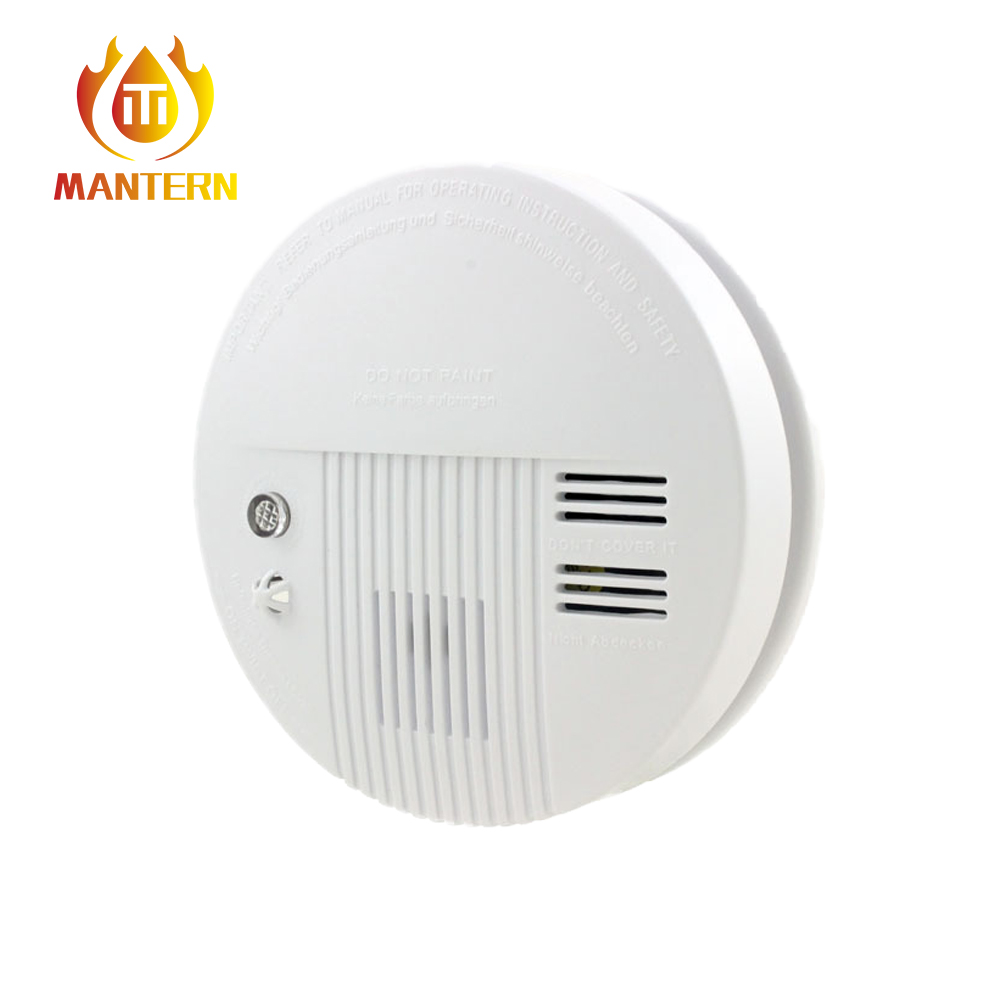
Comparing the two primary acoustic profiles available in the market reveals distinct advantages and hardware trade-offs. The choice between standard high-frequency alarms and specialized low-frequency alarms dictates how well the system protects vulnerable demographics.
Acoustic Profile Comparison
Feature | Standard Alarms (3100 Hz) | Low-Frequency Alarms (520 Hz) |
|---|---|---|
Pitch Characteristics | High-pitched, piercing beep | Low-pitched, deep square-wave tone |
Barrier Penetration | Poor; easily absorbed by doors and walls | Excellent; waves bend around and penetrate obstacles |
Waking Efficacy (General) | Adequate for awake or light-sleeping adults | Superior for all sleeping demographics |
Waking Efficacy (High-Risk) | Often fails to wake elderly or hearing-impaired | Clinically proven to wake high-risk groups effectively |
Power Consumption | Low; ideal for standard battery operation | High; requires larger batteries or hardwiring |
The vast majority of residential alarms utilize a piezoelectric horn that emits a 3100 Hz pure tone. The primary advantage of this frequency is cost-effectiveness and low power draw. Because generating a high-pitched beep requires very little electrical energy, it is the ideal acoustic profile for a standard battery smoke alarm. These devices can operate for years on a single 9V or lithium battery.
However, contextualizing this pitch reveals severe limitations. Standard human speech occurs around 500 to 1000 Hz. At 3100 Hz, standard alarms operate at a much higher pitch. This makes them highly vulnerable to age-related hearing loss, known as presbycusis. Presbycusis naturally degrades the human ear's ability to detect high frequencies first. An elderly individual may have perfectly normal hearing for standard conversation but remain completely deaf to a 3100 Hz alarm, even if it is sounding at 85 dB just a few feet away.
To combat the biological limitations of high-frequency tones, the industry developed 520 Hz low-frequency alarms. These devices emit a deep, square-wave signal. Clinical evidence heavily supports the use of 520 Hz signals for waking high-risk demographics. Studies demonstrate that a 520 Hz square-wave tone is significantly more effective at waking alcohol-impaired individuals, school-aged children, and those with mild to severe hearing impairments.
The square-wave nature of the sound is vital. Unlike a smooth sine wave, a square wave contains multiple harmonics that stimulate different parts of the auditory system simultaneously, increasing the likelihood of waking the brain. The hardware trade-offs for this superior performance involve larger speakers and higher power consumption requirements. Generating deep, low-frequency sound requires moving more air, which drains batteries faster. Consequently, many 520 Hz units require hardwiring with battery backup or utilize specialized, high-capacity sealed batteries.
Even a fully compliant, high-decibel alarm will fail if installed in an acoustically compromised location. Sound behaves like physical energy. It decays over distance, reflects off hard surfaces, and is absorbed by soft materials. Understanding these environmental factors is essential when positioning an independent photoelectric smoke detector.
Sound pressure does not travel infinitely. As sound waves expand outward from the alarm's horn, the acoustic energy spreads over a larger area, causing the volume to drop. This phenomenon is governed by the inverse square law. In practical acoustic terms, calculating dB drop-off over distance reveals roughly a 6 dB loss every time the distance from the source doubles in a free field.
If a detector produces 85 dB at 10 feet, the sound level will drop to approximately 79 dB at 20 feet, and 73 dB at 40 feet. If the distance from a hallway alarm to a bedroom pillow is 20 feet, the alarm is already dangerously close to failing the 75 dBA pillow requirement before even factoring in physical obstructions. This mathematical reality highlights why relying on distant alarms is a flawed safety strategy.
Physical obstructions accelerate sound decay drastically. When a sound wave hits a closed door, some energy reflects back into the hallway, some is absorbed by the door material, and only a fraction transmits into the bedroom. The sound attenuation rates depend heavily on the material density.
Sound Attenuation by Door Material
Door Type | Estimated dB Reduction | Impact on 85 dB Hallway Alarm (at 10 ft) |
|---|---|---|
Hollow-Core Wood | 10 - 15 dB | Reduces pillow volume to ~70-75 dB |
Solid-Core Wood | 15 - 20 dB | Reduces pillow volume to ~65-70 dB |
Solid Metal / Fire Door | 20 - 25 dB | Reduces pillow volume to ~60-65 dB (Fails Code) |
If an alarm delivers 79 dB to the outside of a bedroom door at a 20-foot distance, and the closed solid-core door reduces the sound by 15 dB, the volume reaching the pillow will be only 64 dB. This falls below the NFPA 75 dBA requirement and violates the absolute minimum 65 dBA threshold. Relying on a single hallway detector to wake occupants in closed bedrooms is a massive safety risk.
Proper mounting ensures the alarm horn projects sound efficiently while simultaneously allowing the sensor to detect smoke rapidly. FEMA guidelines outline specific rules for optimal acoustic projection and smoke detection. Alarms should be placed centrally on flat ceilings to maximize sound dispersion in all directions. A centrally located ceiling alarm provides an unobstructed acoustic path to most areas of the room.
If ceiling mounting is impossible, alarms can be placed high on walls. However, they must be positioned typically 4 to 12 inches down from the ceiling. Placing the alarm too close to the corner where the wall meets the ceiling traps the device in a dead air space. In a fire, hot air and smoke rise and mushroom outward, but they do not circulate into sharp 90-degree corners. If placed in this dead air space, the alarm will not detect smoke until the room is heavily involved in fire, rendering the sound output irrelevant due to delayed activation.
Rooms with vaulted or pitched ceilings require specialized placement strategies. NFPA placement rules mandate that alarms on pitched ceilings must be installed within 36 inches of the peak. Smoke naturally travels up the slope of the ceiling and gathers near the highest point.
Installers must strictly avoid the top 4-inch apex of the peak. Similar to wall corners, the very top of a pitched ceiling creates a dead air pocket where trapped ambient air prevents smoke from reaching the sensor. Installing an alarm in this apex delays the warning. The sound must project downward from the slope, meaning the horn should be oriented to face the primary sleeping or living areas directly, rather than projecting sound into an opposing wall.
Synthesizing technical specifications into a purchasing decision requires evaluating the specific environment where the alarms will be installed. A one-size-fits-all approach inevitably leaves acoustic blind spots. You must conduct a thorough assessment of the space to select devices that guarantee compliance and safety.
Before procurement, it is vital to measure the baseline dB in the intended installation spaces. This ensures the selected alarms can meet the 15 dB above ambient rule. Tools and methods for measuring baseline dB range from professional acoustic meters to calibrated smartphone applications.
Take measurements during the loudest normal operating hours of the home or facility.
Turn on HVAC systems, ceiling fans, and typical appliances to simulate maximum ambient noise.
Measure the dBA level directly at the pillow or primary resting area.
Add 15 dB to this baseline measurement to determine the absolute minimum sound pressure the alarm must deliver through closed doors.
Mapping occupant age and hearing ability to Hz requirements is a non-negotiable step in the selection process. Standard 3100 Hz alarms are generally acceptable for awake environments like living rooms, kitchens, and hallways where occupants are alert and capable of hearing high frequencies.
For bedrooms, assisted living facilities, or homes with elderly residents, defaulting to 520 Hz low-frequency alarms is strongly advised. Because presbycusis affects a massive percentage of the population over age 65, and because children sleep through high-pitched tones at alarming rates, low-frequency devices provide a necessary biological safety net.
Acknowledging the inherent limitation of standalone units is critical. They do not trigger other alarms in the building. The safety principle of interconnected alarms does not apply here. If a fire starts in the basement, a standalone alarm in the basement will sound, but the alarm in the second-floor bedroom will remain silent until smoke physically reaches it.
To overcome this limitation without hardwiring a new interconnected system, a strict multi-level mitigation strategy is required. You must install higher-dB or low-frequency standalone units on every single level of the home and inside every individual sleeping room. By placing an alarm directly inside the bedroom, you bypass the need for sound to travel through floors, walls, and closed doors, guaranteeing the occupant receives a compliant 75 dBA signal immediately upon localized smoke detection.
To ensure maximum safety and compliance, execute the following steps immediately:
Audit all intended installation spaces using a decibel meter to establish baseline ambient noise levels during peak hours.
Measure the physical distance from the proposed installation site to the furthest occupant's pillow to calculate potential sound decay.
Evaluate the sound attenuation properties of all bedroom doors, factoring in a 15 to 20 dB loss for solid-core materials.
Install dedicated standalone units inside every sleeping room to eliminate the risk of sound degradation through walls and doors.
Select devices that mathematically guarantee a minimum 15 dB differential above ambient noise at the occupant's location.
A: According to NFPA 72 standards, a smoke alarm must deliver a minimum of 75 dBA at the pillow in any sleeping area. Additionally, the sound level must be at least 15 dB above the average ambient noise level, with an absolute minimum requirement of 65 dBA regardless of the environment.
A: Low-frequency 520 Hz alarms produce a deep, square-wave tone that is clinically proven to be more effective at waking high-risk individuals. This includes the elderly suffering from high-frequency hearing loss, deep-sleeping children, and individuals impaired by alcohol or sleep deprivation.
A: A closed door significantly obstructs acoustic energy. A standard hollow-core interior door typically reduces sound pressure by 10 to 15 decibels. A heavier solid-core door can reduce sound transmission by 15 to 20 decibels or more, severely impacting the alarm's ability to wake someone inside the room.
A: An 85 dB alarm is loud at the source, but distance and closed doors reduce this volume rapidly. For heavy sleepers, standard 3100 Hz high-pitched alarms often fail. Heavy sleepers require an alarm installed directly inside the bedroom, preferably utilizing a 520 Hz low-frequency tone.
A: You can test this using a calibrated digital decibel meter or a highly rated smartphone sound meter app. Close the bedroom door, activate the alarm using the test button, place the meter directly on the pillow, and verify that the reading sustains at least 75 dBA.
A: Yes. To prevent immediate acoustic trauma and permanent hearing damage, safety codes generally cap the maximum sound output of fire alarms at 110 to 120 decibels at the minimum hearing distance. Sounds exceeding 120 dB cross the human threshold of pain and can cause disorientation.
A: If ceiling mounting is not possible, place the detector high on the wall, positioning the top edge of the alarm between 4 and 12 inches down from the ceiling. Avoid the top 4 inches near the corner, as this is a dead air space where smoke and sound do not circulate effectively.
Mantern Industrial Co., Ltd. is engaged in international business since 2012. Our aim is to provide good products with competitive price for our clients.
