

Views: 0 Author: Site Editor Publish Time: 2026-09-09 Origin: Site

That sudden, sinking feeling—wondering, Did I leave the stove on again?—is universally dreaded. As a field engineer, I have seen firsthand how unattended gas appliances escalate from a minor oversight to a devastating fire. They also lead to exorbitant utility bills. While modern smart home technology offers various monitoring solutions, introducing electricity near combustible fuel lines raises massive safety red flags. Furthermore, electric valves become entirely useless during power outages. This failure usually happens right when you need emergency heating or cooking the most.
A brilliantly simple, fail-safe solution exists to bridge this gap. By utilizing a specialized analog device, you can completely automate your fuel shut-off process without relying on a single battery or electrical wire. In this comprehensive guide, we will break down the inner workings of these ingenious devices. You will understand their underlying physics and learn how to select the perfect model to safeguard your property.
Before diving into the mechanics, it is crucial to understand where the industry is currently heading. Recent market analysis and updates to fire safety standards reveal a massive regulatory shift. Despite the hype surrounding Wi-Fi-enabled smart homes, commercial underwriters and municipal fire marshals are pushing back. They increasingly mandate intrinsically safe, non-electric alternatives for combustible environments.
The primary driver behind this trend is grid instability. With extreme weather events causing frequent rolling blackouts, relying on a digital app to shut off a high-BTU fire pit is a serious liability. Consequently, the market trend is clear: critical safety infrastructure is returning to fail-proof analog mechanics. Property owners want guaranteed shut-offs that work regardless of Wi-Fi drops or dead batteries.
100% Mechanical Operation: These kinetic devices rely entirely on a heavy-duty, spring-wound mechanism to physically halt gas flow after a predetermined duration.
Fail-Safe Safety: By acting as a rigid barrier against human error, they drastically reduce the risks associated with silent leaks and accidental fires.
Power-Outage Proof: Because the system requires zero external power sources, it remains fully operational during severe weather events.
Versatile Applications: These robust valves are highly adaptable. They serve perfectly behind indoor stoves, outdoor BBQ grills, or decorative fire pits.
Easy Integration: Designed to thread seamlessly into standard plumbing infrastructure, they offer decades of reliable use.
At its most fundamental level, a mechanical gas timer is a specialized in-line plumbing valve engineered with an integrated analog countdown dial. Unlike standard manual ball valves that demand a user to physically turn a handle, this automated variant handles the shut-off process autonomously. It utilizes zero electronic sensors, motherboards, or motorized actuators.
The primary function of this heavy-duty component is to establish a strict temporal boundary on fuel usage. When you twist the dial to a specific time setting, the internal valve chamber opens. This action permits natural gas or liquid propane to travel to the burner. As the minutes elapse, the dial slowly ticks backward. Once the timer strikes the zero mark, the internal mechanism physically blocks the pipe, instantly and hermetically halting the fuel supply.
By integrating this technology into a fuel line, property owners create an uncompromising physical barrier against forgetfulness. Below is a foundational overview of the standard specifications found in these analog devices:
Specification | Standard Timer Valve Parameters |
|---|---|
Power Source | None (Kinetic / Spring-wound) |
Mechanism | Gear train escapement and rotational ball valve |
Typical Materials | Forged Brass, 304 Marine-Grade Stainless Steel, Aluminum |
Gas Compatibility | Natural Gas (NG) and Liquid Propane (LP) |
Standard Durations | 1-hour, 2-hour, 2.5-hour, and 3-hour maximum dials |
Understanding how these devices function with such unwavering reliability requires a brief look into classical mechanics. The enduring dependability of a no electricity gas valve stems from its reliance on fundamental physics rather than delicate, degradable circuit boards.
The entire operation initiates with human input. When you firmly grasp the dial and rotate it clockwise, you are actively performing mechanical work. This physical exertion winds a robust torsion spring concealed deep inside the timer housing. According to Hooke's Law, the spring captures and stores this physical effort as potential energy. Consequently, this stored tension becomes the sole "power plant" for the device. The further the knob is twisted, the more tension is applied to the coil.
Once you release your grip, the torsion spring naturally seeks to unwind. However, if it were allowed to decompress instantaneously, the valve would violently snap shut. To govern this release of energy, the spring is tethered to an intricate gear train and an escapement mechanism.
Specifically, the gear train consists of interlocking brass or steel cogs that drastically reduce the rotational speed. Meanwhile, the escapement acts as a precise regulator. It bleeds off the spring's potential energy in exact, measured increments. This rhythmic release produces the audible "ticking" sound. The meticulous calibration of these internal gears guarantees that the dial rotates back to zero at a steady, accurate pace. It remains completely unbothered by external temperature drops or minor fluctuations in line pressure.
The critical shut-off capability resides in the physical linkage between the timing mechanism above and the gas flow chamber below. The dial is attached to a specialized cam stem that dictates the position of a spherical ball valve. When the dial is rotated past zero, the hollow channel inside the ball perfectly aligns with the plumbing pipe, granting the gas an unobstructed path.
As the escapement mechanism finally permits the dial to hit zero, a mechanical trip lever is engaged. The final burst of tension remaining in the spring snaps the ball valve exactly 90 degrees. This rapid rotation presents the solid, impenetrable wall of the sphere to the gas flow. It forges an immediate, airtight seal against the PTFE seats. The dramatic transition from fully open to fully closed occurs in a fraction of a second, ensuring absolutely no residual fumes seep through the line.
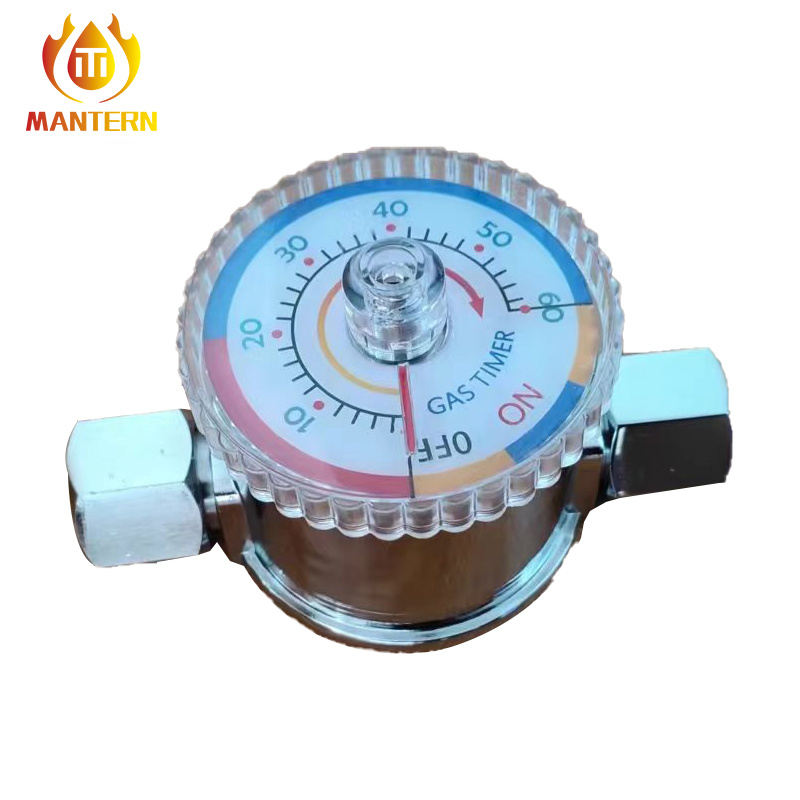
In an era heavily dominated by smart home technology, consumers frequently weigh the convenience of Wi-Fi-enabled shut-offs against the rugged nature of traditional mechanical options. While smart valves offer remote app monitoring, safety inspectors increasingly favor mechanical variants. For decision-makers prioritizing absolute safety, mechanical valves deliver measurable, distinct advantages.
The most glaring vulnerability of an electric valve is its absolute dependence on external power. During winter storms or rolling blackouts, local electrical grids routinely fail. If your home relies on an electronic shut-off, a sudden outage can lock the valve permanently closed. Worse still, it could leave the valve stuck in the open position. In contrast, a kinetic timer remains completely unfazed by grid status. It provides uninterrupted functionality, empowering you to safely operate your stove even in pitch darkness.
Merging electricity with highly combustible fuels inherently introduces a layer of risk. The mere presence of live electrical currents, fraying wiring, and motorized actuators in close proximity to a gas line creates a potential ignition source. Mechanical timers operate with intrinsic safety. Because they house absolutely zero electrical components, the risk of an electrical arc or spark is entirely eliminated.
Beyond the safety metrics, smart devices demand relentless upkeep. They require constant firmware updates, stable Wi-Fi connectivity, and frequent battery replacements. Conversely, mechanical valves boast industrial-grade endurance. Forged from solid brass and stainless steel, they shrug off corrosion and physical wear. Featuring only a handful of moving parts, a mechanical unit can easily outlast the very appliance it serves.
The remarkably versatile architecture of these devices allows them to be spliced into almost any residential or commercial gas setup. Evaluating your specific daily routines will dictate where this fail-safe technology can offer the most profound impact.
Cooking fires remain a leading cause of residential property destruction worldwide. Installing a kitchen gas timer directly behind the stove provides a paramount layer of defense. Picture a busy holiday kitchen, or consider elderly individuals who may occasionally experience memory lapses. By intentionally setting the dial for the exact duration of the recipe, users guarantee that the fuel will sever itself automatically. This successfully prevents scorched cookware and catastrophic kitchen fires.
Backyard patios are notorious locations for accidental fuel waste. Imagine hosting a summer barbecue: it is incredibly common to finish grilling, twist off the burner knobs, yet completely forget to isolate the main supply line. If a burner knob is later bumped by a passing child, an entire propane cylinder can bleed out overnight. Placing a timer between the supply hose and the grill guarantees the fuel is choked off completely after a standard one-hour grilling session.
Decorative gas fireplaces deliver exceptional ambiance, but they transform into severe hazards if homeowners fall asleep while the flames are roaring. Beyond the obvious fire risks, leaving a high-BTU fire feature running unattended will result in staggering monthly utility bills. By mounting a mechanical timer on the adjacent wall, users can dial in two hours of ambiance, drifting off to sleep with the absolute certainty that the flames will extinguish themselves.
Selecting the precise automatic gas shut off valve requires more than simply grabbing the first option off the hardware store shelf. Because this component directly dictates the flow of highly combustible fuels, making an informed, specification-driven decision is critical.
The single most vital technical specification is flow capacity, universally measured in British Thermal Units (BTU) per hour. Every gas appliance requires a specific volume of fuel to operate efficiently. If you mistakenly install a valve with a lower BTU rating than your grill demands, you will inadvertently choke the gas flow. This restriction manifests as frustratingly low flame heights and potentially hazardous carbon soot buildup.
To guarantee optimal performance, you must perfectly match the internal diameter of the valve to your plumbing. Standard residential models typically feature 1/2-inch NPT (National Pipe Thread) connections, which easily handle up to 100,000 BTU/hr for natural gas.
Pipe Diameter (NPT) | Estimated Max BTU/hr (Natural Gas) | Estimated Max BTU/hr (Liquid Propane) | Typical Application Scenarios |
|---|---|---|---|
3/8-Inch | ~50,000 - 60,000 | ~60,000 - 70,000 | Small fire pits, single-burner stoves, portable grills |
1/2-Inch | ~100,000 - 120,000 | ~120,000 - 150,000 | Standard BBQ grills, indoor ovens, medium fire features |
3/4-Inch | ~200,000+ | ~250,000+ | Commercial kitchens, massive outdoor fireplaces, multi-appliance lines |
Manufacturers engineer these units with varying maximum time limits, typically spanning from 1 hour to 3 hours. For high-heat, rapid-duration tasks—such as searing steaks on a patio grill—a 1-hour dial is highly recommended. It acts as a strict safety leash. Conversely, if you are outfitting an indoor oven for slow-roasting a turkey, a 2.5-hour or 3-hour timer is far more practical.
Given that many of these units endure harsh outdoor environments, the metallurgy cannot be compromised. Seek out bodies forged from solid brass or heavy-duty 304 stainless steel. Forged brass aggressively resists rust and maintains the structural integrity of the NPT threads under high installation torque. Avoid cheap cast aluminum or plastic composite knock-offs.
Integrating this technology into your existing infrastructure is a relatively straightforward plumbing task. However, it carries absolutely zero margin for error. Undetected leaks can lead to catastrophic property damage. Strict adherence to established plumbing protocols is paramount.
For exterior applications—such as threading a timer onto a portable liquid propane tank—a competent DIY homeowner can usually complete the installation safely. The standard procedure involves shutting off the main cylinder and applying a gas-rated yellow PTFE thread sealant to the male threads. Use two wrenches to secure the fitting without applying torque to the delicate dial housing. Crucially, a mandatory leak test using a liquid dish soap and water solution must be performed on all joints before ignition.
In contrast, for hard-piped indoor natural gas lines, it is strongly recommended to hire a licensed, certified plumber. Professionals possess the specialized manometers required to conduct rigorous pressure drop tests. This ensures the new installation does not compromise the home’s primary, pressurized gas infrastructure.
In many urban jurisdictions, retrofitting an automatic shut-off device is not merely a safety upgrade; it is a strict regulatory mandate. Building inspectors routinely enforce codes derived from the National Fuel Gas Code (NFPA 54). For multi-family apartment complexes featuring shared rooftop BBQ areas, local codes often demand the presence of a mechanical timer. Installing a certified unit ensures full legal compliance and can frequently result in lowered property insurance premiums.
One of the most celebrated advantages of a kinetic system is its remarkably low-maintenance profile. However, implementing a rudimentary upkeep routine will drastically extend the lifespan of the gas safety timer and keep the internal spring operating fluidly.
Environmental exposure is the primary adversary of mechanical valves. For units mounted outdoors near BBQ islands, the dial shaft can quickly become encrusted with aerosolized cooking grease and airborne pollen. Over the years, this sticky grime can migrate down into the housing, increasing friction on the delicate gear train. Routine maintenance simply involves wiping the exterior with a damp cloth and a mild, non-corrosive degreaser. Under no circumstances should you spray pressurized water or harsh chemical solvents directly at the dial. This will strip away the vital factory lubrication coating the internal springs.
On rare occasions, you might notice that the dial has ceased its rhythmic ticking. If this happens, do not use excessive force to twist the knob back. Applying brute force will easily snap the torsion spring or strip the brass teeth inside the escapement, rendering the device permanently destroyed.
Instead, gently inspect the narrow gap between the knob and the brass body. Often, a tiny piece of debris or a spider web is physically obstructing the rotation. Use a soft-bristled brush or canned compressed air to clear the cavity. If the valve remains stubbornly seized, the internal mechanism has likely failed due to advanced age. Because these are sealed, safety-critical pressure vessels, a damaged unit should never be disassembled for a DIY repair.
A mechanical gas timer is a testament to the power of functional, elegant engineering. It seamlessly turns simple manual spring tension into life-saving automation. By removing the unpredictable variable of human memory from the equation, this unassuming device provides unmatched peace of mind for your entire property. Whether you are upgrading an outdoor patio grill to prevent fuel waste, or safeguarding your indoor kitchen appliances, investing in a non-electric, fail-safe shut-off is one of the smartest property decisions you can make. Take a moment to assess your home's gas appliances today. For decision-makers prioritizing absolute safety and industrial-grade reliability, browse the robust selection of mechanical valves at Mantern to find the exact specifications for your next project.
Yes, absolutely. Mechanical gas timers are intentionally designed to grant the user full manual override control at all times. If you finish your cooking task early, you simply grip the dial and rotate it counter-clockwise back to the "Off" or "Zero" position. This manual action immediately forces the internal ball valve closed, halting the flow of gas exactly like a traditional manual shut-off valve.
When sized and installed correctly, a mechanical timer will not cause any noticeable drop in gas pressure or restrict your appliance's heat output. The internal ball valve is specifically machined to allow a predetermined volume of gas to pass through unobstructed. As long as you purchase a unit with a BTU rating that meets or exceeds the maximum draw of your appliance, your flame height will remain completely unaffected.
Yes. The vast majority of these timer valves are engineered to be dual-fuel compatible, meaning they can safely and effectively regulate both natural gas (NG) and liquid propane (LP). The internal rubber seals and forged brass construction are chemically resistant to both fuel types. However, you must always verify the manufacturer's specific BTU capacity ratings for each respective fuel type prior to installation.
Yes. High-quality timers manufactured from forged brass or marine-grade stainless steel are inherently weather-resistant. They are explicitly designed for permanent, year-round outdoor installation. Unlike battery-operated electronic smart valves—which frequently suffer from rapid battery drain or complete circuit failure in freezing temperatures—a purely mechanical system remains fully operational in extreme sub-zero cold.
In most jurisdictions, yes. In fact, many municipal fire codes and commercial insurance underwriters explicitly require mechanical shut-off timers for communal gas appliances, such as rooftop grills in apartment complexes or outdoor patio heaters in restaurants. Always consult your local fire marshal and verify that the specific valve you purchase carries the necessary certifications (such as CSA or CE marks) required in your region.
The safest and most standard industry method is the bubble test. Mix a few drops of liquid dish soap with water in a spray bottle. Turn on your main gas supply so the line is pressurized, but keep the timer dial in the "Off" position. Spray the soapy solution generously over all threaded connection joints. If you see bubbles forming and expanding, you have a leak. Shut off the main gas immediately, disassemble the joint, reapply fresh gas-rated PTFE tape, and retighten.
Mantern Industrial Co., Ltd. is engaged in international business since 2012. Our aim is to provide good products with competitive price for our clients.
