

Views: 0 Author: Site Editor Publish Time: 2026-08-11 Origin: Site

Intermittent manual gas sampling and reliance solely on personal monitors leave critical temporal and spatial blind spots in hazardous industrial environments. Plant operators cannot wait for a worker to walk into a hazardous zone to detect a leak. Achieving zero-latency response to toxic or combustible gas leaks requires a robust infrastructure that operates without human intervention. Facilities must maintain strict regulatory compliance while minimizing false alarms that disrupt operations and cause unnecessary evacuations.
Deploying a network of permanent sensors serves as the foundational infrastructure for true continuous plant monitoring. This approach shifts the operational posture from reactive to proactive. By integrating a Fixed Gas Detector system, facilities gain uninterrupted visibility into atmospheric conditions across high-risk zones. This technical evaluation guide explores how these systems function, the technologies driving them, and the integration strategies necessary to protect critical assets and personnel.
Architectural Backbone: A fixed gas detector network provides the uninterrupted, localized data streams required for automated safety instrumented systems (SIS) and SCADA integration.
Technology Matching: Selecting the correct sensor technology (e.g., IR vs. catalytic bead) is highly dependent on the specific target gas, environmental contaminants, and required response times.
Integration Over Isolation: Modern fixed gas transmitters must be evaluated not just on detection accuracy, but on their digital communication capabilities (HART, Modbus, ISA100) for seamless continuous gas monitoring.
Functional Safety Integration: Aligning equipment with IEC 61508/61511 (SIL ratings) and utilizing voting logic (e.g., 2oo3) dramatically minimizes spurious trips while guaranteeing safety action.
Successful continuous gas monitoring requires more than bolting sensors to a wall. It demands sub-second response times, 99.9% operational uptime, and flawless integration with plant-wide alarm systems. The primary goal is identifying a loss of containment instantly. When a seal fails on a compressor or a valve ruptures, the monitoring system must detect the escaping gas, quantify the concentration, and trigger executive actions before the gas cloud reaches an ignition source or a populated work area. Success is measured by the system's ability to operate autonomously under extreme environmental conditions without generating nuisance alarms.
Engineers evaluate system performance based on T50 and T90 response times—the time it takes for the sensor to read 50% and 90% of the actual gas concentration, respectively. In high-velocity pipeline environments, a T90 time of under 10 seconds is often mandatory to initiate emergency shutdown (ESD) sequences before a catastrophic accumulation occurs.
Portable monitors are essential for personal protection, but they only sample the air immediately surrounding the worker. Perimeter monitoring systems, such as open-path lasers, secure the facility boundary but often miss localized leaks deep within the process area. A permanent detection network serves as the critical middle layer. These devices are strategically mounted near high-risk assets like storage tanks, manifolds, and pump stations. They provide localized, 24/7 protection for the equipment itself, ensuring that leaks are caught at the source regardless of human presence.
Permanent gas detection installations are governed by strict industry frameworks. Organizations such as OSHA and the NFPA dictate the necessity of these systems in specific hazardous environments. The IEC 60079 series outlines the stringent requirements for equipment operating in explosive atmospheres. Furthermore, ISA-92.00.01 establishes the performance benchmarks for toxic and combustible gas detectors, detailing acceptable response times, accuracy tolerances, and environmental resilience. Compliance with these standards forms the legal and operational baseline for facility safety.
In modern process safety management, gas detectors are rarely standalone devices. They function as critical sensor elements within Safety Instrumented Systems (SIS) compliant with IEC 61511. A device's Safety Integrity Level (SIL) rating indicates its reliability and its probability of failure on demand (PFD). When designing a safety loop to close an emergency isolation valve, engineers rely on SIL-certified transmitters to ensure the detection phase of the loop performs exactly as expected during a critical event.
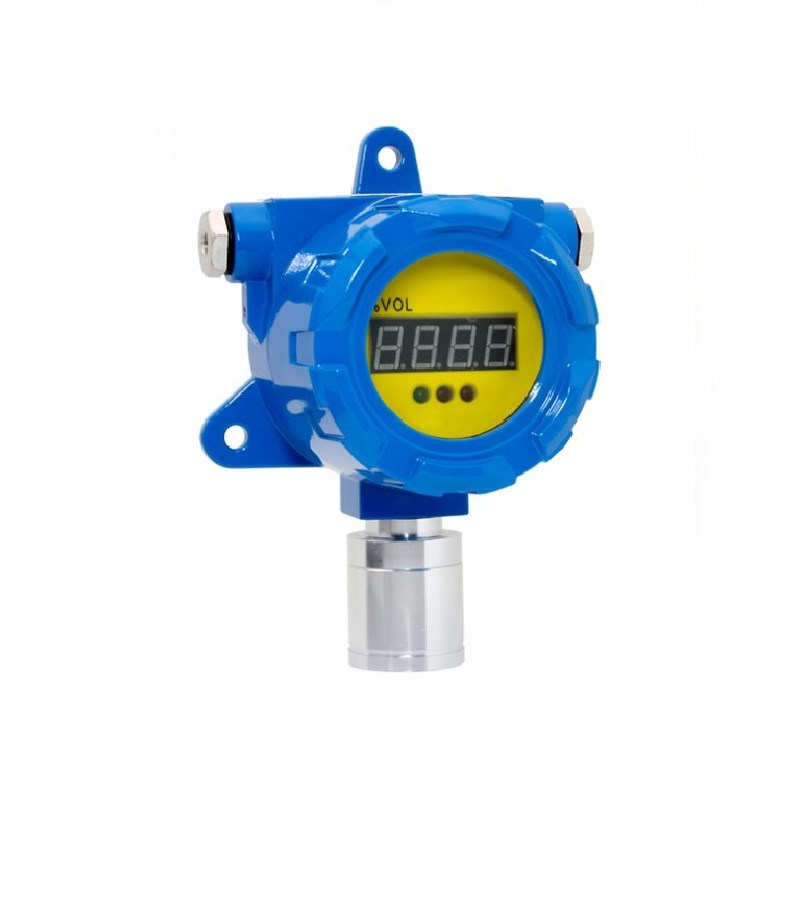
Selecting the right sensor technology dictates the reliability of the entire safety loop. Electrochemical sensors excel at detecting toxic gases like hydrogen sulfide and carbon monoxide at parts-per-million (ppm) levels. They rely on a chemical reaction that generates a current proportional to the gas concentration. However, they have a finite lifespan as the electrolyte depletes over time.
Catalytic bead (pellistor) sensors are the traditional choice for combustible gases. They operate by burning the target gas on a heated wire coil, measuring the resulting temperature change. While effective, they require oxygen to function and are highly susceptible to poisoning by silicones or heavy metals. Infrared (IR) sensors offer a robust alternative for combustible gas detection. They measure the absorption of specific light wavelengths by hydrocarbon molecules. IR sensors do not require oxygen, are immune to chemical poisoning, and generally offer a longer operational lifespan, making them superior in low-oxygen environments or areas with known catalytic poisons.
Sensor Technology | Target Gases | Strengths | Limitations |
|---|---|---|---|
Electrochemical | Toxic (H2S, CO, NH3) | High sensitivity at ppm levels, low power draw. | Electrolyte depletion, cross-sensitivity to other gases. |
Catalytic Bead | Combustible (LEL) | Detects a wide range of flammable gases, linear output. | Requires oxygen, susceptible to poisoning (silicones, lead). |
Infrared (IR) | Combustible (Hydrocarbons), CO2 | Immune to poisoning, works in inert atmospheres, fail-safe. | Cannot detect hydrogen (H2), affected by heavy condensation. |
Point detectors measure gas concentration at a single, specific location. They are ideal for targeting known leak sources like flanges or pump seals. Open-path systems, utilizing infrared or Tunable Diode Laser Absorption Spectroscopy (TDLAS), transmit a beam of light across a distance to a receiver. They measure the total gas burden across that line of sight. Open-path systems are highly effective for boundary monitoring and covering large, open process areas where a gas cloud might drift between point detectors. A comprehensive safety strategy typically employs a combination of both technologies.
Monitoring carbon dioxide presents unique challenges. CO2 is naturally present in the atmosphere, but at high concentrations, it acts as both a toxic hazard and an asphyxiant. Deploying an industrial carbon dioxide detector requires specialized technology. Non-Dispersive Infrared (NDIR) sensors are the standard for accurate, continuous CO2 measurement in breweries, chemical plants, and carbon capture installations. These applications often involve extreme humidity, rapid temperature fluctuations, and varying pressure levels. NDIR sensors must incorporate advanced compensation algorithms to maintain accuracy and prevent false readings under these dynamic environmental conditions.
Equipment installed in hazardous areas must prevent the ignition of explosive atmospheres. Explosion-Proof or Flameproof (Ex d) enclosures are designed to contain an internal explosion and cool the escaping gases below the ignition temperature of the surrounding atmosphere. This is the standard approach for Zone 1 or Class I Division 1 areas. Intrinsically Safe (Ex i) configurations limit the electrical and thermal energy within the device to levels incapable of causing ignition. The choice between Ex d and Ex i depends heavily on the specific zone classification, wiring infrastructure, and maintenance protocols of the facility.
Toxic and combustible gases require fundamentally different detection strategies. Toxic gases are measured in parts-per-million (ppm) and require low-level alarm thresholds to protect personnel from long-term exposure. Combustible gases are measured as a percentage of the Lower Explosive Limit (LEL). Placement strategies also differ based on vapor density. Detectors for heavy gases like propane or hydrogen sulfide must be mounted near the ground, while detectors for lighter gases like methane or hydrogen must be positioned near the ceiling or above potential leak sources. Fail-safe requirements ensure that any device fault immediately alerts the control system.
Traditional 4-20mA wired systems provide highly reliable, deterministic signal transmission. They are the backbone of most industrial safety networks. However, installing conduit and pulling cable across a complex facility is labor-intensive and highly disruptive. Wireless protocols, such as WirelessHART and ISA100.11a, offer significant flexibility. They allow operators to deploy sensors in remote or difficult-to-access locations without extensive mechanical work. When utilizing wireless networks, engineers must carefully manage signal latency, battery replacement schedules, and potential RF interference to ensure the network meets the required safety response times.
A modern fixed gas transmitter does more than output an analog signal. Through digital protocols like HART or Modbus, it passes a wealth of diagnostic data to the Distributed Control System (DCS) or SCADA network. This connectivity enables centralized safety dashboards where operators can monitor real-time gas concentrations, track sensor health, and identify calibration drift before it causes a failure. This data-driven approach facilitates predictive maintenance, allowing technicians to service devices based on actual condition rather than arbitrary calendar schedules.
Detection is only the first step; the system must initiate a response. This requires complex logic mapping within the control system. When a detector crosses a critical threshold, the system must automatically execute predefined actions. This might include closing emergency isolation valves, triggering deluge systems, or activating high-capacity ventilation fans. To prevent costly spurious trips, engineers implement voting logic. A 2oo3 (two-out-of-three) voting configuration requires two independent sensors in a specific zone to detect gas before initiating a plant shutdown. This maintains the required safety integrity while drastically reducing the risk of false alarms shutting down production.
Map all potential leak sources and assign corresponding sensor tags in the DCS.
Establish low-level alarms (e.g., 20% LEL) for visual/audible warnings and ventilation activation.
Establish high-level alarms (e.g., 50% LEL) tied to the voting logic matrix.
Configure the SIS to execute emergency shutdown procedures only when the voting criteria (e.g., 2oo3) are met.
The physical deployment of a detection network involves significant mechanical and electrical engineering. Routing explosion-proof conduit, installing specialized mounting brackets, and integrating the wiring into existing junction boxes require specialized labor. Facilities must also conduct detailed structural assessments to ensure sensors are positioned correctly relative to airflow and potential vibration sources. The installation phase demands rigorous project management to minimize disruption to ongoing plant operations while ensuring strict adherence to hazardous area electrical codes.
Maintaining detection accuracy requires a disciplined calibration schedule. Sensor performance degrades over time due to environmental exposure and chemical reactions. Routine bump testing verifies that the sensor responds to target gases, while full calibration adjusts the device's output to match a known gas concentration. Premium sensors equipped with diagnostic self-testing capabilities can extend the intervals between manual calibrations. Understanding the expected degradation rate of specific sensor types allows maintenance teams to plan replacement cycles proactively, ensuring continuous protection without unexpected downtime.
Technological advancements have streamlined field maintenance. Smart sensors store their calibration data directly on the sensor module rather than in the transmitter housing. This enables the use of hot-swappable cartridges. Technicians can calibrate a spare sensor in the controlled environment of a workshop and quickly swap it with a deployed unit in the field. This plug-and-play functionality eliminates the need to de-classify hazardous areas or obtain hot work permits during routine sensor replacement, significantly reducing maintenance hours and operational friction.
A highly reliable monitoring network directly impacts facility uptime. By detecting minor leaks early, operators can schedule targeted repairs during planned maintenance windows, avoiding emergency shutdowns. Furthermore, verifiable, continuous monitoring systems provide documented proof of a facility's safety posture. This data is critical during risk assessments and safety audits. Demonstrating a proactive approach to leak detection and automated safety responses often satisfies stringent insurance requirements and regulatory mandates.
Industrial environments are filled with background chemicals that can compromise sensor integrity. Catalytic bead sensors are particularly vulnerable to poisoning by siloxanes, hydrogen sulfide, and heavy metals. Once poisoned, the sensor will fail to detect combustible gases, creating a dangerous blind spot. Cross-sensitivity occurs when a sensor reacts to a non-target gas, leading to false alarms. Mitigating these risks requires a thorough understanding of the chemical background of the facility. Engineers must select poison-resistant sensors or utilize alternative optical detection methods, such as IR technology, to ensure reliable performance in contaminated environments.
Improper installation renders even the most advanced sensor useless. Detectors must be placed directly in the path of a potential gas release. However, environmental factors complicate this process. High velocity airflow from HVAC systems or natural wind patterns can dilute gas clouds or push them away from the sensors. Extreme temperature fluctuations can cause condensation on optical lenses, while heavy vibration from nearby machinery can damage internal components. Site assessments must account for these variables, utilizing weather shields, splash guards, and vibration-damping mounts to protect the instrumentation.
Relying on generic grid placement rules is insufficient for complex process areas. Modern facility design utilizes 3D gas mapping software compliant with ISA-TR84.00.07. These sophisticated models simulate gas dispersion based on physical leak probability, operating pressures, and environmental aerodynamics. By visualizing how a gas cloud will behave in a specific 3D space, engineers can optimize detector placement. This scientific approach ensures maximum coverage with the minimum number of devices, eliminating blind spots and improving the overall effectiveness of the safety network.
An install-and-forget mentality is the greatest threat to a continuous monitoring system. All sensors experience calibration drift over time. Without a documented, auditable maintenance schedule, the system's accuracy will slowly degrade until it fails to respond during an actual emergency. Facilities must implement rigorous tracking systems to monitor device health, schedule routine bump tests, and enforce mandatory calibration intervals. Accountability and continuous oversight are essential to combat sensor drift and maintain the integrity of the safety infrastructure.
Initiate a comprehensive 3D site gas mapping study to determine optimal sensor placement based on actual airflow and leak probabilities.
Audit existing control systems to verify compatibility with digital communication protocols like HART or Modbus for advanced diagnostics.
Request pilot tests of specific transmitters in the actual plant environment to validate performance against background contaminants.
Establish a strict, documented calibration and bump-testing schedule aligned with manufacturer specifications and regulatory requirements.
A: A permanent system is hardwired into the facility, providing continuous power, real-time data feeds, and integration with automated shutdown systems. It protects specific assets 24/7. Portable monitors are worn by personnel, offering localized, temporary protection only in the immediate vicinity of the worker.
A: Calibration frequency depends on the sensor technology, environmental exposure, and manufacturer specifications. Typically, devices require calibration every 3 to 12 months. Local regulatory mandates and specific facility safety protocols also dictate the required maintenance intervals.
A: Yes. Modern detectors utilize standard industrial outputs such as 4-20mA, Modbus, or HART protocols. This allows seamless integration into SCADA systems for real-time concentration logging, automated alarm triggering, and remote diagnostic monitoring.
A: False alarms are often triggered by sudden temperature shifts, humidity condensation on sensor elements, cross-sensitivity to non-target background chemicals, radio frequency interference, or a lack of proper voting logic in the control system.
A: Placement depends on the target gas density relative to air, facility ventilation patterns, and the location of potential leak points. Modern best practices require computer-aided 3D gas mapping assessments to simulate dispersion and optimize sensor positioning.
A: Sensor poisoning is the chemical degradation of catalytic bead sensors caused by exposure to substances like silicones, sulfides, or lead. It prevents the sensor from detecting gas. Utilizing Infrared (IR) sensors, which are immune to these chemicals, is the primary prevention strategy.
A: Safety Integrity Level (SIL) is defined by IEC 61508/61511. It quantifies a device's probability of failure on demand (PFD). A higher SIL rating indicates greater reliability, making the transmitter suitable for integration into critical emergency shutdown systems.
Mantern Industrial Co., Ltd. is engaged in international business since 2012. Our aim is to provide good products with competitive price for our clients.
