

Views: 0 Author: Site Editor Publish Time: 2026-09-30 Origin: Site

Ever walked out to the patio the morning after a barbecue, only to hear the faint hiss of an empty propane tank? Leaving a gas grill on by accident happens far more often than most care to admit. Not only does this waste expensive fuel overnight, but it also creates a severe fire hazard. When it comes time to upgrade their equipment, homeowners and facility managers alike frequently find themselves confused by the available shut-off devices. Many end-users hesitate to adopt complex electronic systems, often noting in online forums that relying on invisible currents and intricate wiring makes them nervous.
To clear up this confusion, we need to look under the hood. By breaking down the operational mechanics of mechanical and electric flow controllers, you will learn exactly which safety mechanism fits your specific infrastructure. Ultimately, choosing the right valve ensures total peace of mind for your property.
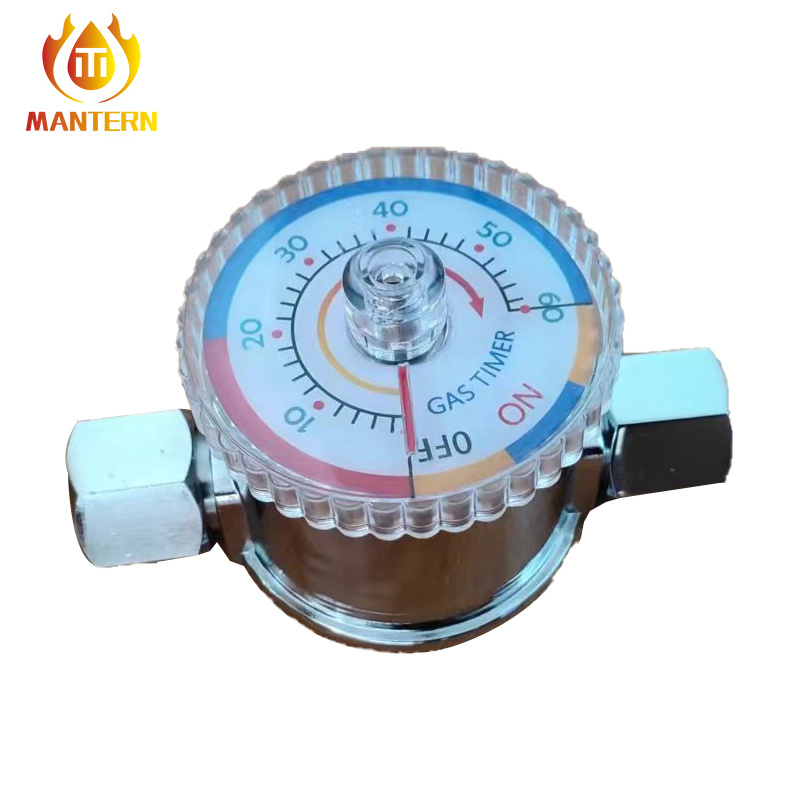
A mechanical dial device requires zero electricity. It physically severs the fuel flow after a manually set duration.
An electromechanical solenoid relies on electrical currents to open or close, making it the premier choice for smart home integration.
For outdoor recreational equipment like fire pits and residential barbecues, a physical timer is often the most reliable and cost-effective safeguard.
For complex HVAC networks, industrial boiler rooms, and remote-controlled setups, automated electrical valves remain the strict industry standard.
Both devices significantly enhance overall hazard prevention. However, they serve entirely different functional environments and mitigate completely different types of risks.
Recent industry analysis reveals a fascinating divergence in how these two technologies are currently deployed across different sectors. Commercial facilities are aggressively adopting IoT-enabled solenoid networks to comply with increasingly stringent municipal fire codes. These automated systems can instantly shut down gas lines during a fire alarm trigger.
Conversely, the residential market is experiencing a massive resurgence in mechanical solutions. Modern homeowners are intentionally designing "off-grid" outdoor kitchens. By favoring the standalone reliability of a mechanical timer valve, they successfully avoid the long-term maintenance headaches associated with running outdoor electrical conduit and troubleshooting weatherproof relays.
At its core, this is a manually operated, purely mechanical shut-off device designed to halt the flow of natural gas or liquid propane after a predetermined countdown. Because it relies entirely on physical kinetic energy rather than delicate printed circuit boards, field engineers highly value it for its rugged simplicity and complete grid independence.
The internal operation mimics the reliable functionality of a traditional kitchen egg timer, utilizing a heavy-duty, spring-loaded dial mechanism. From an engineering standpoint, the design is brilliantly self-contained.
Picture finishing up a family barbecue. When you turn the exterior dial to a specific time setting—such as the standard 1-hour or 3-hour maximums found on premium models—that physical action winds an internal torsion spring. Simultaneously, it pushes open the internal brass seal, allowing fuel to flow through the 1/2" NPT inlet to your burners. As the hour passes, the spring slowly unwinds. Once the indicator reaches the zero mark, the stored kinetic energy releases abruptly. The internal seal snaps shut instantly, completely cutting off the fuel supply without requiring a single watt of external power.
Because they do not require conduit routing or electrical outlets, these robust devices dominate outdoor residential and commercial patio settings. Common applications include built-in outdoor BBQs, backyard fire features, and patio heaters where human distraction poses the primary risk.
For property owners looking to secure outdoor entertainment spaces, investing in a weatherproof unit guarantees that appliances are never left running indefinitely. Built with durable 304 stainless steel or forged brass housings, these units prevent wasted propane and drastically mitigate the risk of unattended deck fires.
In stark contrast to manual dials, an electromechanical solenoid uses an active electric current to control the flow of combustible fuels. Engineers design these units specifically for automation, allowing them to communicate seamlessly with larger facility management hubs, relay boards, or residential smart home ecosystems.
The beating heart of this automated system is the electromagnetic coil, which wraps tightly around a movable metallic plunger. When a specific voltage (commonly 12V, 24V, or 120V) passes through this copper coil, it generates a concentrated magnetic field. This invisible force physically lifts the plunger, opening the internal orifice to permit fuel flow.
Specifically in combustible fuel applications, manufacturers configure these components almost exclusively as "Normally Closed" (NC). A Normally Closed unit remains tightly shut when no electrical power is present. It only opens when power is actively and continuously applied. This serves as a critical fail-safe. In the event of a total municipal power blackout, the magnetic field dissipates instantly. A heavy internal spring then forces the plunger down, terminating the fuel supply immediately. Furthermore, installers can hardwire an automatic gas valve directly to external environmental sensors—like carbon monoxide detectors or emergency stop buttons—allowing for instantaneous emergency lockdowns.
Automated electrical valves are the gold standard for environments demanding complex scheduling or remote oversight. You will find them in bustling commercial kitchens, municipal distribution networks, industrial boiler burners, and modern smart-home heating systems. They are absolutely essential in any scenario where a network must react to environmental hazard data faster than a human operator ever could.
To make an informed decision for your infrastructure, you must understand how these devices compare across key operational metrics. Choosing the wrong mechanism often leads to frustrating functional limitations or entirely unnecessary plumbing expenses.
Feature | Mechanical Timer Valve | Electromechanical Solenoid |
|---|---|---|
Operating Mechanism | Physical (Spring-loaded dial) | Electromagnetic (Coil & plunger) |
Power Requirement | None (100% off-grid) | Electrical (12V, 24V, 120V) |
Default State | Closed (until manually wound) | Normally Closed (fails safe) |
Automation Level | None (Manual intervention only) | High (Sensor & hub integration) |
Installation | Straightforward inline plumbing | Complex dual-trade (plumbing + electrical) |
The most profound operational difference lies in how the mechanisms generate power. A physical dial operates entirely on kinetic energy provided by the user's wrist. It requires zero electrical input, making it completely immune to neighborhood blackouts or tripped breakers. On the other hand, an electromechanical unit demands a continuous, stable power supply. If the voltage fluctuates or drops entirely, the plunger will drop and sever the fuel line unless supported by an external battery backup system.
Integrating a manual timer is generally a straightforward inline plumbing task. Installers typically thread it between the main supply pipe and the appliance's flexible hose using standard NPT fittings. Many homeowners with basic DIY plumbing experience successfully install them, provided they use proper gas-rated Teflon tape and perform rigorous soapy water leak tests.
Conversely, installing an automated solenoid is significantly more demanding. It requires advanced plumbing expertise to pipe the heavy brass body into the mainline, alongside certified electrical expertise to hardwire the coil to a dedicated power source. In almost all jurisdictions, this dual-trade requirement mandates hiring a licensed professional.
Manual dials offer a much lower barrier to entry. They are generally more affordable upfront and demand zero electrical troubleshooting over their lifespan. Maintenance usually involves wiping heavy grease off the dial face and ensuring the metal housing remains free of yard debris.
Automated systems carry a higher initial purchasing cost, compounded by professional installation fees. Long-term maintenance involves periodically checking wire terminal connections, ensuring the copper coil has not degraded from continuous heat generation, and verifying that all connected safety sensors are actively communicating with the main relay.
Complete Grid Independence: They are 100% immune to utility failures. Whether there is a severe thunderstorm blackout or you are operating in a remote cabin, the mechanism functions flawlessly.
Intuitive Ease of Use: The physical operation is universally understood. Twisting a knob requires no technical manuals, Wi-Fi pairing, or smartphone applications.
Exceptional Outdoor Durability: Built with heavy-duty materials, they easily shrug off torrential rain, heavy snow, and intense UV exposure.
Foolproof gas safety control: They act as an uncompromising backup against human distraction. If a cook walks away to mingle with guests, the winding spring guarantees a safe shutdown.
Manual Intervention Required: They absolutely cannot be controlled from afar. You must physically walk up to the equipment to initiate the flow or extend the cooking time.
Strict Time Limitations: The fuel flow is rigidly limited to the maximum duration printed on the faceplate. Consequently, they are entirely unsuitable for appliances like water heaters that need to run continuously.
Seamless Automation: They integrate deeply into modern smart building architectures, allowing facility managers to monitor and schedule fuel usage from a centralized digital dashboard.
Instantaneous Emergency Response: When paired with environmental monitors, a gas solenoid valve can sever the supply in mere milliseconds, preventing catastrophic localized explosions.
Uninterrupted Operation: Unlike a winding dial, an electromagnetic coil can hold the orifice open indefinitely as long as stable power is supplied.
Power Dependency: They are inherently vulnerable to grid instability. While they safely close during an outage to prevent leaks, this fail-safe also means you lose all access to your heating appliances until power is restored.
User Anxiety: The reliance on invisible electrical currents can make some end-users nervous. However, understanding that standard models are "Normally Closed" helps alleviate this fear.
Professional Overhead: The strict necessity for dual-trade installation substantially increases the overall financial investment and complexity of the project.
When evaluating safety profiles, homeowners frequently ask which option provides superior protection. The objective truth is that neither device is inherently "safer" in a vacuum. Instead, manufacturers engineer them to mitigate entirely different categories of risk. Understanding these distinctions is the absolute foundation of effective hazard management.
Human forgetfulness is undeniably one of the leading causes of residential fire incidents. Leaving an outdoor barbecue running after a party poses a massive threat. This is precisely where the mechanical approach excels.
A manual dial acts as the ultimate safeguard against distraction. Because the user must physically set a time limit before ignition can occur, the system is inherently self-limiting. If you set the knob for sixty minutes, the internal spring guarantees the fuel will be severed exactly at the end of that duration. For mitigating risks associated with human behavior, this physical restriction offers unparalleled protection.
Systemic failures—such as a ruptured basement pipe or a malfunctioning commercial burner—require a completely different defensive strategy. A mechanical dial cannot smell a leak. It will blindly continue to push fuel until its countdown expires.
This exact scenario is where automated electrical intervention becomes critical. Because solenoids are electromechanical, they act as the muscles for your environmental hazard sensors. If a commercial fire alarm detects smoke, it sends an immediate electrical pulse to the solenoid relay. In fractions of a second, the magnetic field deactivates, the heavy plunger drops, and the hazard is isolated. Simply put, physical dials protect you from yourself, while electrical solenoids protect you from unseen mechanical breakdowns.
Selecting the correct gas shut off valve requires a careful assessment of your physical environment, technical requirements, and budget. Use the following parameters to identify the precise solution for your infrastructure.
For the vast majority of residential outdoor applications, a mechanical solution is the most practical choice. You should opt for this device if:
You are operating recreational equipment: Devices like built-in BBQ islands and backyard fire pits are highly susceptible to being left on accidentally.
You lack accessible electrical infrastructure: Running new conduit to an outdoor patio can be prohibitively expensive.
You prefer a straightforward installation: Threading a mechanical unit inline using standard 1/2" NPT fittings is far less complex than wiring a relay board.
While mechanical dials are perfect for localized control, they are wholly inadequate for scenarios requiring continuous flow. Invest in an electrical unit if your project involves:
Smart Home Integration: If you want the ability to lock down your home's main supply via a smartphone application while on vacation.
Commercial Applications: Restaurants and large-scale boiler rooms require continuous flow that cannot be interrupted by a manual countdown.
Strict Fire Code Compliance: Many commercial building codes mandate that lines feeding commercial kitchens must interlock with the building's fire suppression system.
Choosing the right flow controller ultimately depends on your exact operational needs and installation environment. A mechanical dial offers pure, rugged simplicity and off-grid reliability, making it the undisputed champion for outdoor recreational spaces. On the other hand, an electrical solenoid provides advanced automation and rapid emergency response, serving as the backbone for complex commercial and smart-home systems.
For outdoor grills and fire pits, mechanical options easily win out by preventing dangerous accidents caused by simple human forgetfulness. Ready to secure your outdoor kitchen or commercial facility? Explore the full range of premium flow control solutions at Mantern China to find the exact valve that fits your safety and infrastructure requirements.
Yes, the majority of high-quality mechanical units are engineered to be compatible with both liquid propane (LP) and natural gas (NG) systems. However, it is absolutely critical to verify the manufacturer's specific pressure ratings before installation. Natural gas typically runs at a lower pressure (around 7 inches of water column) compared to propane (which often runs at 11 inches of water column or higher). Always ensure that the unit's maximum operating pressure safely exceeds the output pressure of your specific regulator.
The response of an automated unit to a power outage depends on its engineering design, but for combustible fuels, the strict industry standard is the "Normally Closed" (NC) configuration. In an NC setup, an active electrical current is required to lift the plunger. If the municipal power grid fails, the electromagnetic field dissipates instantly. A heavy-duty internal spring then forces the plunger down, sealing the orifice. This ensures unburned fuel does not silently accumulate during a blackout.
While physical dials do not require the specialized electrical knowledge needed for solenoids, hiring a certified plumber or gas fitter is highly recommended. Any modification to a combustible fuel line carries inherent risks. A professional will ensure that the pipe threads are properly sealed using gas-rated Teflon tape or pipe dope, and perform a comprehensive leak test using an electronic sniffer under standard operating pressure.
The lifespan of a mechanical dial is largely dictated by the materials used in its construction and the harshness of its local environment. Premium models featuring 304 stainless steel housings and brass internal components can easily last 5 to 10 years outdoors. To maximize longevity, protect the housing from direct, heavy rainfall and avoid forcefully twisting the knob past its maximum printed time limit.
Many industrial and commercial-grade solenoids are equipped with a manual override feature, though this is quite rare on basic residential models. A manual bypass is typically a physical screw, lever, or handwheel located on the brass body that allows an operator to manually lift the plunger even when there is no electricity. Always consult the specific product data sheet to confirm if a manual override is included.
Yes, mechanical timer valves are position-independent. Because they rely on a tightly wound internal torsion spring rather than gravity to close the internal seal, they function perfectly whether installed vertically, horizontally, or even upside down. However, for the sake of user convenience and preventing water pooling on the dial face, mounting them horizontally with the dial facing outward or upward is the standard best practice.
If sized correctly, a timer valve will not cause a noticeable pressure drop. Most standard residential grills use a 1/2-inch or 3/8-inch gas line. As long as you purchase a valve with matching NPT inlet/outlet sizes and an adequate BTU rating (many standard models support up to 100,000 BTUs), your grill will receive the full volume of fuel required to reach maximum searing temperatures.
Mantern Industrial Co., Ltd. is engaged in international business since 2012. Our aim is to provide good products with competitive price for our clients.
